
By Kaleena Fraga
(to listen to a version of this piece in podcast form, click here)
On February 5th, 1937, President Franklin Delano Roosevelt announced that he would attempt to expand the Supreme Court bench. His announcement incited instant outrage–Roosevelt’s opponents accused him of trying to pack the court so that he could push through his New Deal policies. Roosevelt’s plan was radical—he sought to completely reshape the court—but the idea of changing the number of justices is not, and indeed, Congress has adjusted the size of the Supreme Court six times in American history.
Originally, the Judiciary Act of 1789 ruled that there would be six justices. But when Thomas Jefferson swept to power in a Democratic wave that also put his party in Congress, the lame-duck Federalist Congress voted to reduce the number of justices to five. When the next Congress was sworn in, they repealed this decision, keeping the court at six justices. In Jefferson’s second term, they added a seventh, affording Jefferson the opportunity to appoint someone to the bench.
Thirty years later the size of the court changed again. Congress increased the court to nine justices, which gave Andrew Jackson the opportunity to hand-pick the two additions to the Supreme Court.
Change came again in the 1860s. This was a a turbulent time for the nation, and the Supreme Court. In the midst of the Civil War the court expanded yet again to an all-time high of ten justices–this time to protect an anti-slavery/pro-Union majority. But when Andrew Johnson became president following Lincoln’s assassination, the Republican Congress reduced the size of the court to protect it from a Democratic president. The court shrank from ten justices to seven. Congress effectively removed Johnson’s ability to appoint any justices. Then when Ulysses S. Grant became president in 1868 after Johnson left office, Congress voted to expand the court to nine justices. For many people in 1937 when Roosevelt made his pronouncement, nine justices felt like a norm—like an unchangeable fact of the judicial system.
Roosevelt’s plan, however, was not as simple as expanding the court. He wanted to enforce rules to make justices retire at 70, and, if they refused, give himself the power to appoint associate justices who could vote in their stead. This would effectively give him the power to sculpt the court, and to ensure the legality of his New Deal legislation.
FDR had had a productive first term, and had won reelection by a stunning margin. (He had won the largest popular vote margin in American history, and the best electoral vote margin since James Monroe ran unopposed). But the justices on the Supreme Court had publicly expressed opposition to Roosevelt’s policies. Because six of the nine were over 70, Roosevelt’s plan would boot them off the bench. His argument was that they had grown too old to do their work, and that they had fallen behind. A lifetime term, Roosevelt said, “was not intended to create a static judiciary. A constant and systematic addition of younger blood will vitalize the courts.”
But Roosevelt’s statement that the Court was behind on its work wasn’t true. His plan was met with roaring opposition as letters poured in from around the country. Even his vice president, John Nance Gardner, expressed displeasure as the plan was read aloud in Congress, holding his nose and making a thumbs-down gesture. In the Senate, Roosevelt could only gather 20 votes for his plan.
Roosevelt wasn’t able to make any changes to the Supreme Court. Yet, perhaps because of his maneuvering, he convinced one justice, Owen Roberts, to switch his vote to support many New Deal policies.
Given the outrage at the time of Roosevelt’s proposal, and it’s ultimate failure, it’s no wonder that the idea of changing the composition of the court is often met with distrust and derision. But there is nothing in the Constitution that says the Supreme Court has to stay at nine justices, and, indeed, it has fluctuated between six and ten throughout American history. Perhaps Roosevelt could have succeeded if he had merely attempted to expand the Court as Congress did under Jefferson, Jackson, and Grant.
Today, with the retirement of Justice Anthony Kennedy, the Supreme Court’s swing vote, the idea of changing the composition of the court has begun to gain traction among Democrats. As many liberals look down the barrel of thirty or forty years of conservative Supreme Court decisions, expanding the court to allow the appointment of more liberal justices could be the remedy they are seeking.
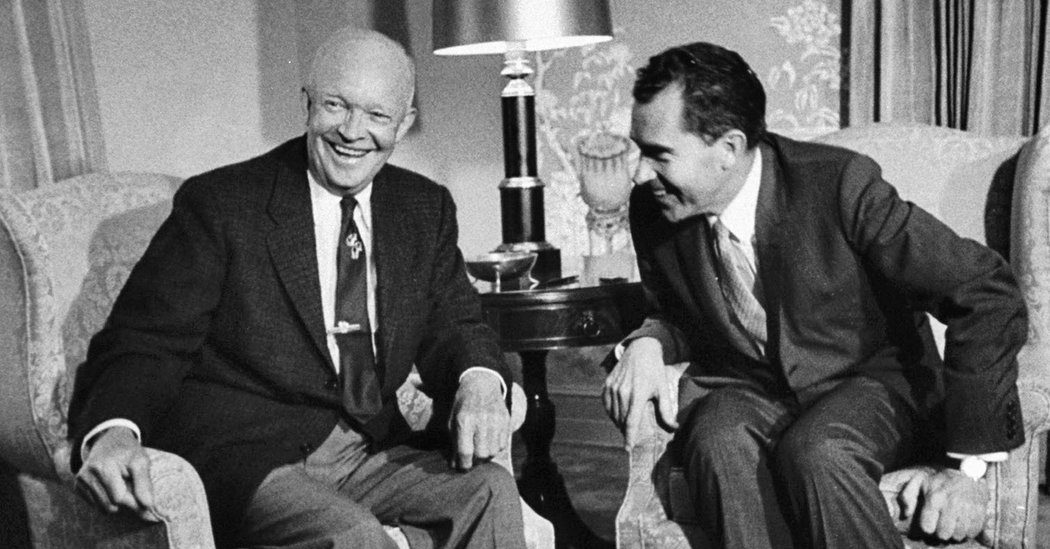
 While Eisenhower maintained a healthy distance from the campaign, Nixon leapt into the fray. He put up a fight for the presidency that would embitter many against him for the rest of his political career, including Harry Truman, who interpreted Nixon’s messaging as a sly way of calling him a traitor. (Truman would later insist that Nixon had personally accused him of treason, although no evidence exists to support this). Even in Nixon’s lowest point of the campaign–when he was forced to defend his use of a political slush fund in the now famous “Checkers” speech–he was sure to add at the end that electing Eisenhower was important because the Democrats had left the government riddled with Communists and corruption.
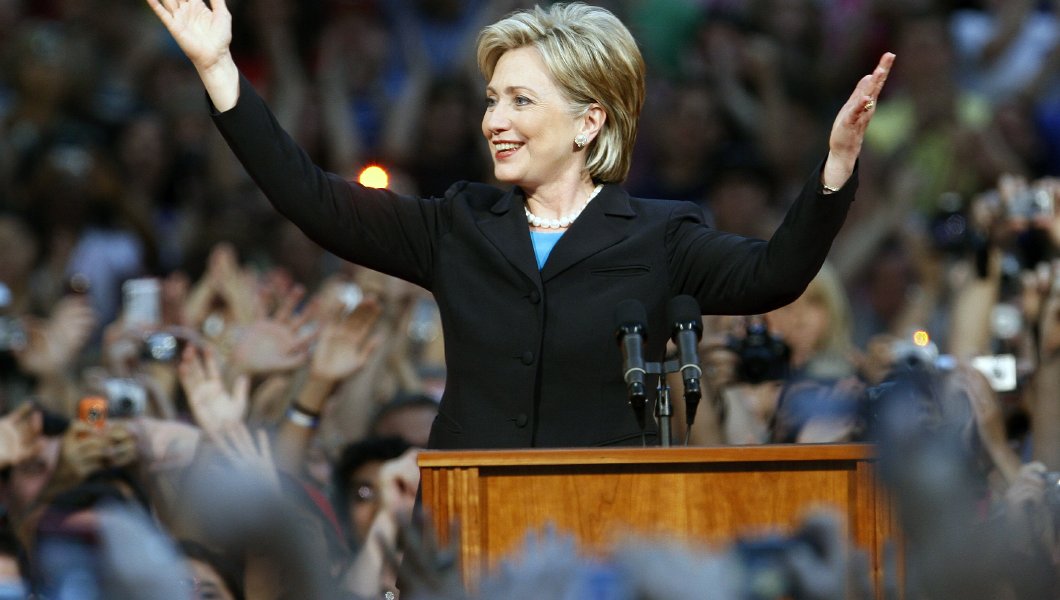
 Four years before the 19
 Mondale, who won the Democratic nomination. Formerly a member of the House of Representatives, Ferraro was the first female vice presidential candidate for a major party. Not surprisingly, the media focused on the novelty of a female on a major ticket and critiqued her on inexperience. Reporters called into question her marriage, family finances, and even tried to invent a connection to the Italian mob based on her family’s heritage. The campaign never recovered, and Reagan/Bush went on to win decisively in November.


 via scooter. The French barely blinked. In the 1990s, when Bill Clinton faced accusations of adultery while in office, the affair consumed the country. For Americans, the private lives of politicians and public officials are often important indications of their character.
 Cleveland claimed that the paternity was uncertain; his supporters dismissed the allegations as “boys being boys” although in 1884, Cleveland was 47 years old. Republicans reveled in this, and would gather to chant “
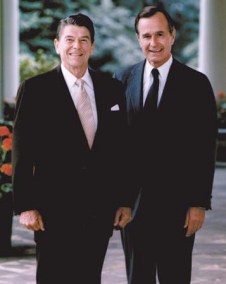 Jackson in 1836. This feat would not be repeated until 152 years later, when George H.W. Bush became president after serving as Ronald Reagan’s VP for eight years.
 death of the incumbent–eight vice presidents became president this way, including Calvin Coolidge, Teddy Roosevelt, and LBJ, who once eerily remarked before Kennedy’s inauguration that he’d accepted the number two spot because, statistically, there was a one in four chance Kennedy could die in office.

 History First