American Military Parades, A History

By Kaleena Fraga

Listen to this piece in podcast form HERE

Last week, Donald Trump made some waves by professing his wish to have a military parade. While many balked at the suggestion, it’s not all together an un-American tradition. Still, past military parades have been held largely for one of two reasons: they were during/directly following a war, or they were held for the inauguration of a president.

There were several military parades in the 1940s to either support troops fighting in WWII, or to celebrate the victory. These parades could last hours–one lasted eleven hours–and would attract thousands and thousands of people. One parade in 1942 even featured an enormous bust of the current president, Franklin Roosevelt (pictured above).

1991.jpg

Similarly, two military parades were held following the United States’ victory in the Gulf War, one in Washington D.C. and one in New York City. The D.C. parade attracted 800,000 people and cost a cool twelve million dollars. Aside from the soldiers, wrote the Washington Post, the parade’s real stars were the “seven-block-long array of weaponry that helped defeat Iraq.” The subsequent New York parade, noted The Post, would make D.C.’s look like a dress rehearsal.

Other military parades have coincided with the inauguration of a new president. Both Dwight D. Eisenhower and John F. Kennedy made military parades a part of their inauguration festivities.

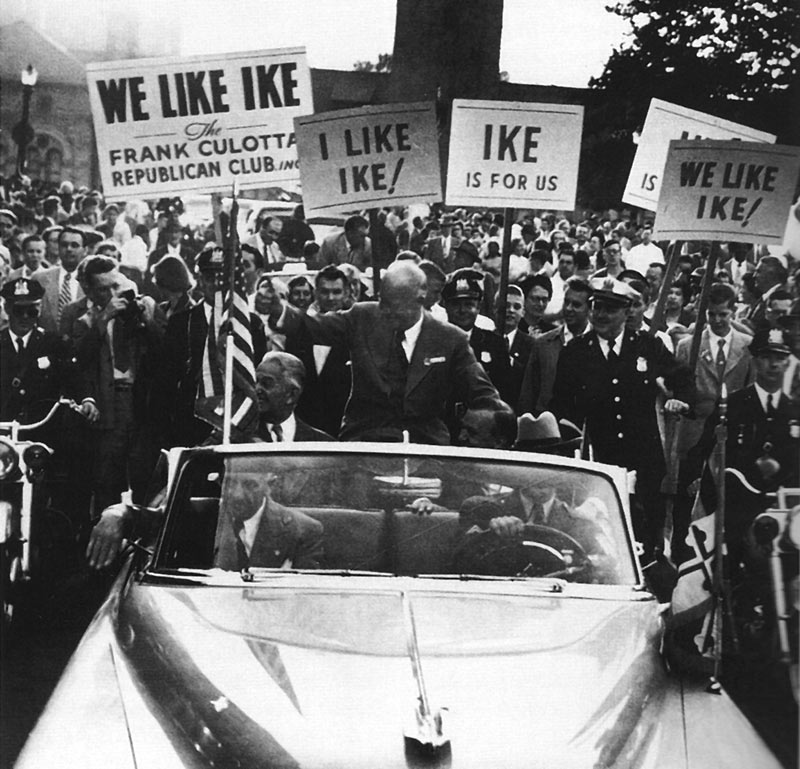
IKE_parade

Eisenhower had military style parades at both his inaugurations. These parades presented all the latest military technology as well as soldiers, bands, and floats. In 1953 they featured an 85 ton atomic cannon; in 1957 the belle of the ball was the first successful ballistic missile. For Eisenhower, who came to office not as a politician but as a war hero, this sort of display reflected both his background and the country’s stance as a new military power during the early days of the Cold War. Eisenhower’s parade was over the top in other ways as well–in addition to missiles, it reportedly featured hundreds of horses, three elephants, and an Alaskan dog team.

Eisenhower had several advisors who wanted him to throw military parades more often, like those seen in Soviet Russia. But Ike refused. According to historian Michael Beschloss , Eisenhower believed imitating the Soviets would make the United States look weak–there was no need to flaunt the fact that the country was the most powerful on earth.

kennedyparade

John F. Kennedy, another Cold War president, likewise had a military style inauguration parade, which, like Ike’s, showed off American military technology. Alongside the dozens of missiles on display, the parade also included soldiers and sailors sitting atop Navy boats, which were towed along the parade route.

In between Kennedy’s inauguration and the Gulf War Victory parades thirty years later, military type parades seem to have fallen out of fashion, including for presidential inaugurations. This may be because of the unpopularity of the Vietnam war–presidents likely did not want to draw too much attention to the military on the days they were inaugurated. Many vets returning from Vietnam found little celebration–rather, they were met with anger. When New York threw a parade for Vietnam veterans in 1985, one vet remarked that the parade was “ten years too late,” and that when he came home originally, “people booed.”

Whether or not Trump’s military parade will happen has yet to be seen. If it does, it will be somewhat of an outlier, as the United States is not celebrating a military victory, attempting to strum up support for its current wars, or marking the inauguration of a new president.

Happy Birthday Mr. President: The Ronald Reagan Edition

By Kaleena Fraga

Today, February 6th, 2018, would have been the Gipper’s 107th birthday. In celebration, here are ten of History First’s favorite Reagan facts:

  1. Reagan earned his nickname “the Gipper” from his time as an actor in Hollywood. In the film Knute Rockne: All American, Reagan played a football player named George Gipp who, upon becoming ill, urges his teammates to “win one for the Gipper.” Somewhat ironically given recent events, the film is about a Norwegian immigrant who reinvents football at Notre Dame, and later returns to the school to coach.

2. Reagan won a landslide victory in 1984; his opponent, Walter Mondale, carried only Washington D.C. and his home state of Minnesota.

3. Disunity in the Democratic party in 1980–incumbent Jimmy Carter faced an intraparty challenger in Ted Kennedy-prompted one party operative to declare that the Dems had to take their “unity medicine”: turn around three times and say President Ronald Reagan.

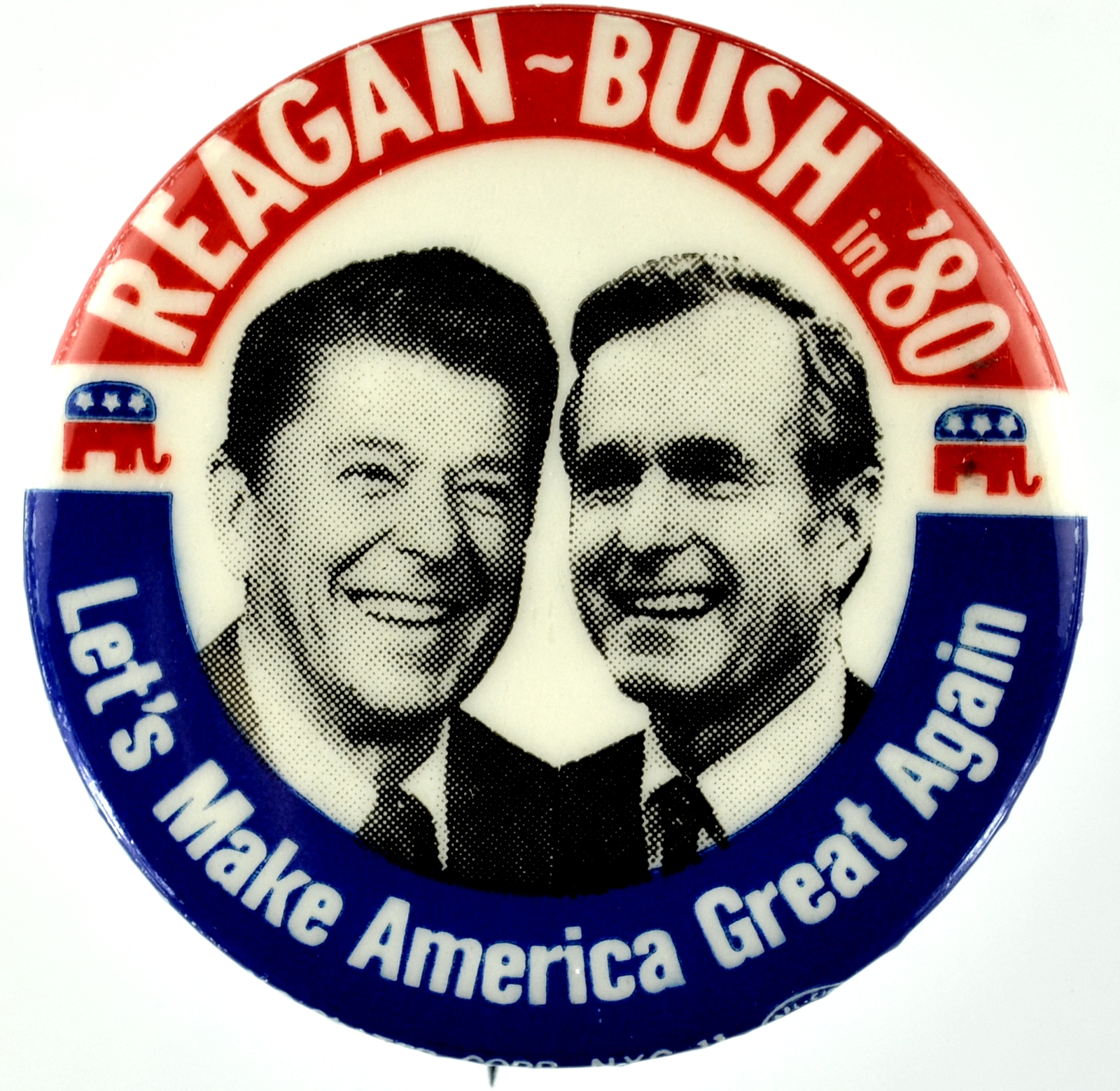
MAGA reagan style4. Reagan-Bush ran a slogan in 1980 that will sound familiar to many Americans today: “Let’s Make America Great Again.”
5. Reagan was known for his quips. After he survived an assassination attempt in 1981, he famously said to his wife, Nancy, “Honey, I forgot to duck.” When Reagan met his team of surgeons he’s reported to have remarked, “I hope you’re all Republicans.” Facing accusations of growing too old for the office during his reelection campaign in 1984, Reagan averred during a debate: “I will not make age an issue of this campaign. I am not going to exploit, for political purposes, my opponent’s youth and inexperience.”

6. At the time of his second inauguration, Reagan was 74–making him the oldest president at the beginning of his term.

7. Some found Reagan’s endorsement of his successor, George H.W. Bush, less than sdoenthusiastic. The New York Times called the run up to the endorsement “one of Washington’s longest-running and least suspenseful political dramas,” after Reagan insisted on waiting for the end of the Republican primary to announce his pick. Despite his nickname as the “Great Communicator” and Bush’s eight years of service as VP, Reagan flubbed Bush’s name during the endorsement, pronouncing it George Bosh.
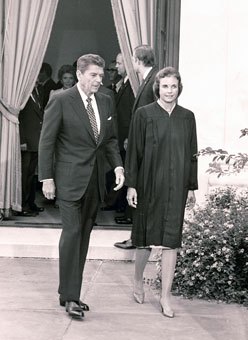
8. Reagan appointed the first female Supreme Court Justice, Sandra Day O’Connor. Her nomination fulfilled one of Reagan’s 1980 campaign promises. O’Connor was confirmed by a Senate vote of 99-0.

9. Famous for loving Jelly Beans, Reagan hated brussel sprouts (maybe never tried roasting them!)

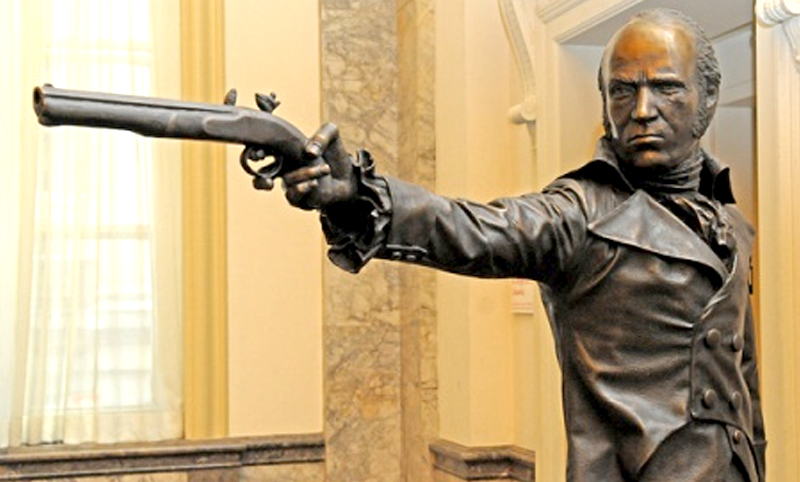
10. Reagan shares a birthday with Aaron Burr, infamous for his role in the death of the first Secretary of the Treasury (and current Broadway star) Alexander Hamilton.

aaronburr

“My Fellow Americans”: A Brief History of the State of the Union

By Kaleena Fraga

On January 30th, Donald Trump followed presidential tradition in obeying the words written in the Constitution: that the executive, from time to time, should give Congress information on the state of the nation.

The first ever address was given by George Washington, in 1790. He and his successor, John Adams, both gave speeches to Congress.

Thomas Jefferson ended the short lived tradition of a spoken address, either because he thought it too king-like, because it took too much time, or perhaps due to his fear of public speaking. He instead sent a letter to Congress.

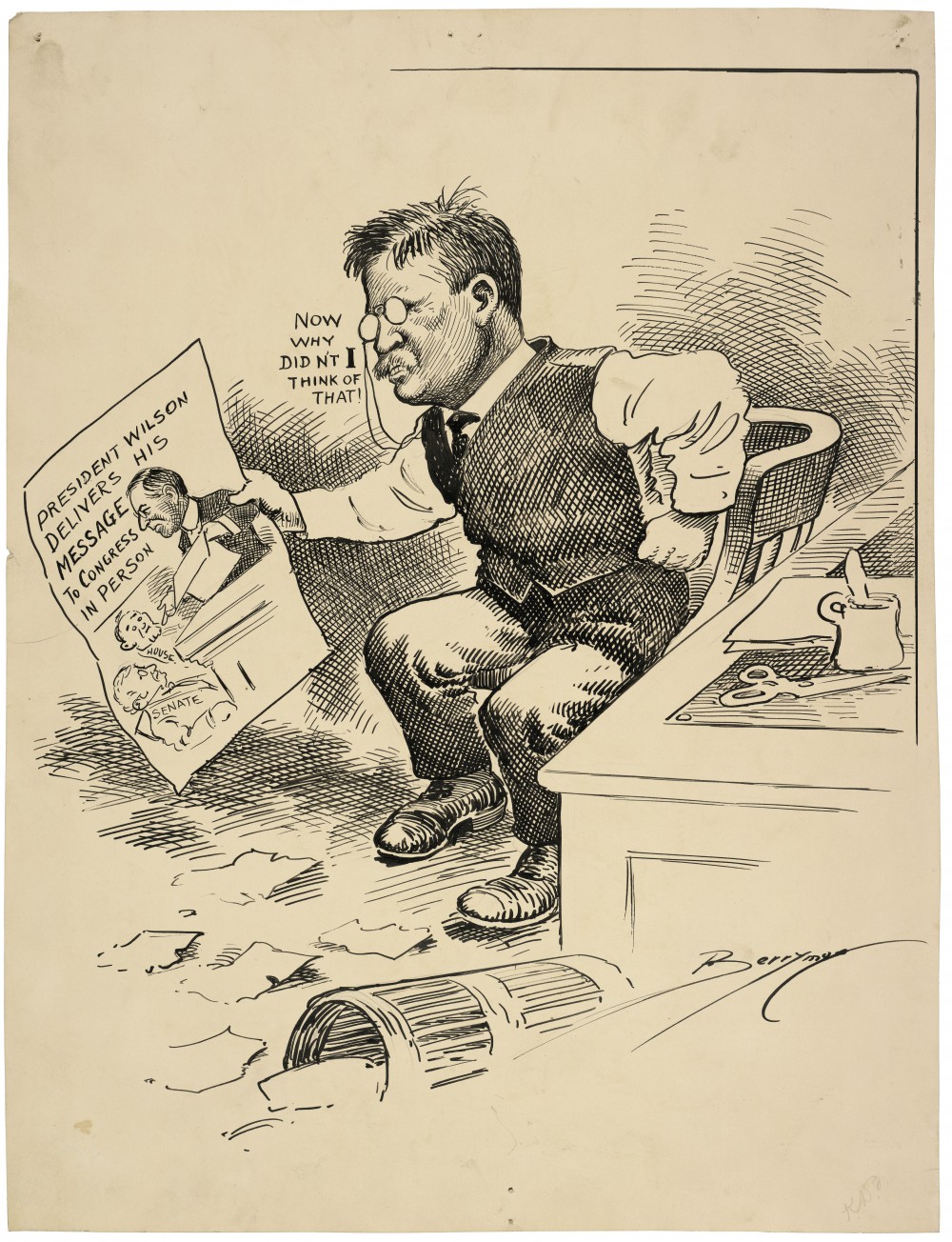
teddy and wilson
Teddy Roosevelt depicted reacting to Wilson’s spoken SOTU

It would take over one hundred years for the speech to return. Woodrow Wilson went to Congress to give his State of the Union, prompting the tradition that Trump followed on Tuesday.

Although most presidents post-Wilson have elected to give a speech, others have fallen back on written messages to Congress. The American Presidency Project has a comprehensive table of presidents giving oral or written addresses–after Wilson they clearly tilt in favor of addressing Congress in person. Still, there have been moments in recent history in which the president has forgone a formal, oral address to Congress. Truman, Eisenhower, and Carter chose to submit a written message instead of a formal address, when the address coincided with the election of a new president (1953, 1961, and 1981). Carter was the last president to do so.

The reach of the State of the Union (indeed, of all presidential addresses) has grown since its inception. Americans have gone from reading about it in the newspaper to hearing it on the radio (after Calvin Coolidge’s national broadcast in 1923) to seeing it on TV (with Harry Truman’s 1947 address) to sitting at home and watching it on the internet (which Bill Clinton did for the first time in 1997).

Two SOTU traditions were born under Ronald Reagan: first, the invitation of guests by the president and First Lady, and second, a response by the opposition party directly following the president’s speech (this had existed before, but would take place a few days later).

Clinton, perhaps unsurprisingly, holds the record for the longest address at one hour and bjctwenty-eight minutes. Each of his addresses to Congress were around or above the one hour mark. His speech was also the longest at 9,190 words (Washington’s, by comparison, was the shortest at 1,089 words).
Trump’s address on Tuesday was one of the slowest in history–in terms of words per minute. Richard Nixon spoke the most words per minute since the metric was recorded during the Johnson administration. He’s followed by Reagan and Clinton, with a near tie between George W. Bush and Barack Obama.

Only two presidents never delivered a State of the Union, through letter or otherwise–William Henry Harrison and James Garfield. Both died (Harrison of pneumonia, Garfield by assassination) early in their presidencies.

As for that that ubiquitous phrase “my fellow Americans”? Lyndon Johnson coined that for the first time during one of his State of the Union speeches.

Martin Van Buren and the Myth of OK

By Molly Bloom

Martin Van Buren is generally regarded as a below-average, simply “okay” president and is often overlooked for the two presidents who served contiguous to his term. Andrew Jackson and William Henry Harrison typically garner more attention; the former for his controversial presidency and the infamous Indian Removal Act, and the latter for the shortest presidential term in US history.

whh
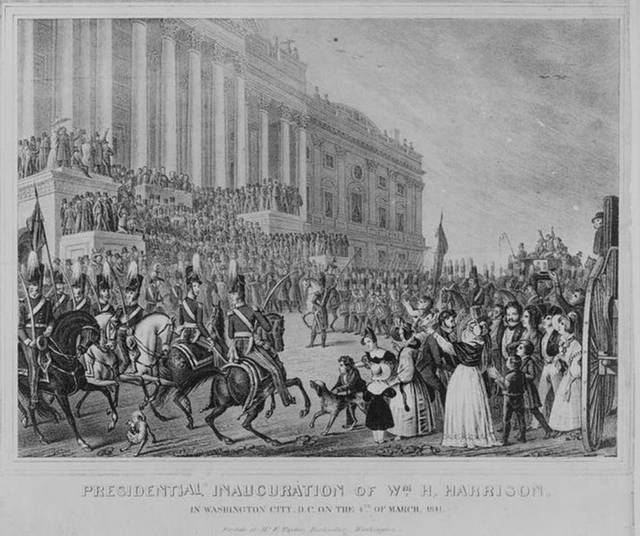
The inauguration of William Henry Harrison, 1840

Van Buren was the heir apparent to the presidency after a political career culminating with his service as Andrew Jackson’s vice president. Jackson’s support aided Van Buren’s campaign as a member of the relatively new Democratic Party in 1836, leading to his election. However, after a poorly rated presidency that included the “Panic of 1837” economic depression, his 1840 presidential campaign faced considerable opposition. Harrison defeated Van Buren’s run for a second term in 1840 to become the oldest man elected president, and age was a point of contention during his campaign. (Since then, both Ronald Reagan and Donald Trump have been elected in their 70s). Harrison famously delivered a superfluous inaugural address on a frigid day, refusing to wear a coat to demonstrate that despite being 68 years old, he was still robust and fit to serve. He contracted pneumonia during his excessive speech and died a month later.

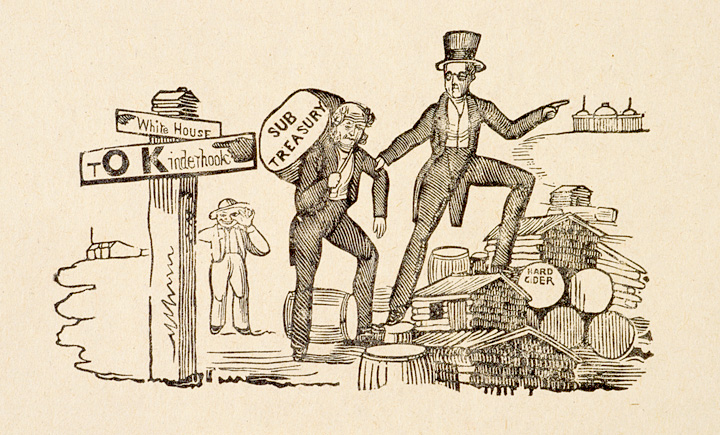
 Van Buren’s 1840 campaign is often credited with the origin of the term “OK,” widely popular both then and now; however, the derivation of “OK” is convoluted. Proposed origins of OK range from the Choctaw okeh which holds the same meaning as the modern okay, to the Greek olla kalla, “all good,” to stories of a baker with the initials OK stamping the letters on army biscuits. Allan Metcalf explains in his book OK: The Improbable Story of America’s Greatest Word that OK grew out of a joke written in March of 1839 by editor Charles Gordon Greene in the Boston Morning Post. The joke was that even if a person couldn’t spell “all correct,” they could “o.k.” something to say it was “oll korrect.” OK came out of a time when intellectuals were using wordplay to publish punchy jabs, and abbreviations were becoming popular- precursors to the modern LOL, JK, and even POTUS.

 Born in Kinderhook, New York, Van Buren earned the nickname of “Old Kinderhook,” further popularizing the abbreviation “OK.” His Whig opponent, William Henry Harrison, was famous as “Old Tippecanoe” or the “Hero of Tippecanoe” due to his military victory at the Battle of Tippecanoe in 1811. With running-mate John Tyler, Harrison’s campaign song of Tippecanoe and Tyler Too included lyrics criticizing Van Buren, calling him “little.” (Sound familiar?) The song stated, “For Tippecanoe and Tyler too/ And with them we’ll beat little Van, Van, Van/ Van is a used up man.”

 OK remained a running theme during the campaign.  OK Clubs of Van Buren’s supporters rose up around the country, using the meaning of OK, all correct, to say that voting for Van Buren was giving a stamp of approval. His opponents used the term OK to attack Van Buren, stating that his political ally Andrew Jackson was so unintelligent that he “OK’d” bills during his presidency since he could not properly spell “all correct.” Regardless of the debated origin of OK, Van Buren’s 1840 run certainly helped disseminate the word. OK is used today as nearly any part of speech; as a noun, verb, adjective, interjection, et cetera, and in almost infinite scenarios so that the meaning has a certain amount of ambiguity. Van Buren’s presidency was just OK, or it could have even been considered oll korrect or all correct depending on your point of view, which is ultimately the legacy of Old Kinderhook’s story.

As Seen on TV: Presidents & the Press

By Kaleena Fraga

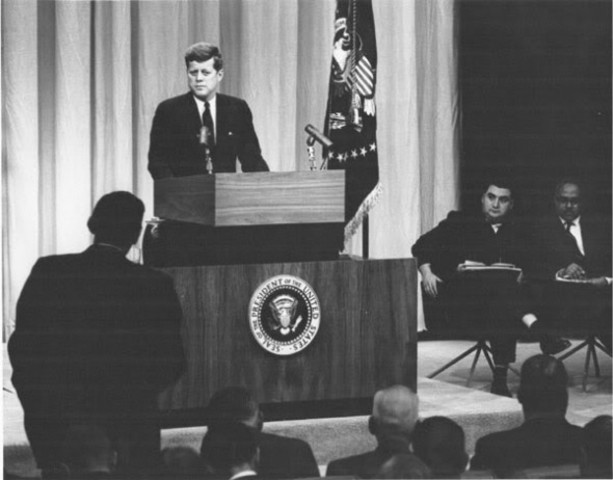
On this day in 1961, John Kennedy gave the first live televised press conference. The exchange can be watched in its entirety below:

Kennedy had observed what an effective medium television had been for him during the debates in 1960, and was determined to utilize it in his presidency–popular political lore says that TV viewers picked Kennedy as the debate winner over the sickly, sweaty Nixon, but listeners of the radio thought that Nixon’s deeper voice gave him the victory.

Kennedy was not the first president to utilize television during his press conferences, but he was the first to do it live. Dwight Eisenhower first held a televised press conference in 1955. Ike walked up to the podium, looked over the gathered reporters, stuck one hand in his pocket and said, “Well, I see we’re trying a new experiment this morning. I hope it doesn’t prove to be a disturbing influence.”

In between 1961 and his death in 1963, Kennedy gave 65 press conferences, about twice a month, an average of every sixteen days.  He and Eisenhower both gave about 700 public addresses, big and small, which says something about the pace of the Kennedy White House–Eisenhower had eight years in power, Kennedy less than three. Kennedy always went in prepared to meet the press–his aide Pierre Salinger described how they would go over 20-30 possible questions the press might ask the night before.

fdrpress
Roosevelt greets reporters at his first press conference, 1933

It was certainly a more studious method than that of Franklin Roosevelt, who, during his first press conference, let 125 reporters into the Oval Office to shoot their questions at him. The three presidents before him–Hoover, Coolidge, and Harding–had required that all questions were written down and submitted in advance. The new system was met with relief and excitement from the reporters who followed the White House. Roosevelt, with the advantage of being in office for an unprecedented 12 years, gave more news conferences than any other president. Over his tenure, he would give 881. It was no wonder that, after his first address, the assembled reporters gave the new president a round of applause.

rooseveltandreporters
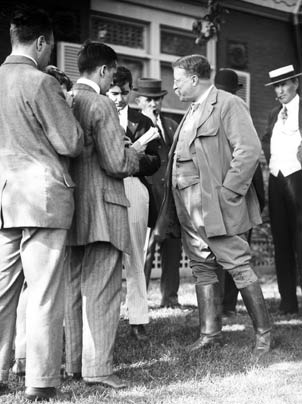
Roosevelt talking to reporters, 1906

Teddy Roosevelt, too, had a nonchalant attitude toward the press. According to biographer Doris Kearns Goodwin, Teddy understood that the strength of his message relied on his relationship with the press (Roosevelt is the one, after all, who coined the term “bully pulpit”). Kearns writes that Roosevelt “called reporters by their first names, invited them to meals, took questions during his midday shave…[and] brought them aboard his private railroad car during his regular swings around the country.”

Curiously, perhaps because early century presidents lacked other methods of communication, the number of news conferences given per year gradually declined toward the end of the 20th century. In other words, as the use of television grew, presidents used it less, at least for press conferences. According to the American Presidency Project, Coolidge, over six years in office, delivered an average of 72.9 news conferences a year, 407 total, barely beating FDR’s average of 72.66. (Somewhat surprisingly, since Coolidge was known by the moniker “Silent Cal.”) By contrast, more modern presidents have given far fewer. Ronald Reagan gave the least, with an average of just 5.75 conferences per year.

That’s more than the current president. Donald Trump still has three years in his term, but as of January 2018, he’s given just one solo press conference.

Inauguration 1961: Truman, Kennedy & a Return to the White House

By Kaleena Fraga

(To check out this piece in podcast form, click here)

January 20th is full of stories of the passage of power from one administration to the next. Since 1936 presidents have been inaugurated on this day, so so there is plenty to remember–FDR marking the beginning of his unprecedented 3rd and 4th terms; Eisenhower playfully lassoed by a cowboy; Jimmy Carter & Rosalynn Carter walking the inauguration route in spite of the protests of the Secret Service–the list goes on and on.

Still, there’s one event worth reflecting on which happened the next day, on January 21st, 1961, and this is President Truman’s invitation to the White House. It was his first time returning to the White House since he’d left eight years earlier.

ike campaign

Truman had left in 1953 after a hard defeat for his party. Eisenhower had won a decisive victory over the Democratic candidate, Adlai Stevenson, whom Truman encouraged to run, becoming the first Republican victor in 20 years. Still, Truman was gracious in defeat. He invited Ike to the White House in November 1952 to talk about the job, but later wrote that all he had said to Ike “went into one ear and out the other.” He later postulated that Ike, a war hero, would be unsuited to the task of president. “He’ll sit right here and he’ll say do this, do that! And nothing will happen. Poor Ike–it won’t be a bit like the Army. He’ll find it very frustrating.”

eisenhower-truman1

Inauguration itself had been an awkward affair. Eisenhower, determined to not step foot in the White House that day until he could do so as president, disregarded the tradition of calling on the current president & first lady. The Eisenhowers declined the Trumans’ invitation to lunch, or even a cup of coffee, and did not come out of their car until Truman appeared outside of the White House. As they drove off, an aid to President Truman remarked that he was glad to not be in the car. 

Despite all this, Truman had invited Eisenhower’s son, John, currently serving in Korea, back to the States to watch his father’s inauguration. Neither son nor father knew it had been the president’s orders until Eisenhower asked Truman in the car. According to Eisenhower, Truman simply replied: “I did.”

But any thaw that took place during the car ride had little effect on the Truman/Eisenhower relationship. Shortly after the ceremony ended, Truman returned to Missouri, where he’d largely remain for Ike’s next two terms. It seems the two presidents had little contact during that time. When Ike was in Missouri Truman tried to set up a meeting, but was told that the president’s schedule was much too full. Later in life, according to Truman biographer David McCullough, he could hardly refer to Eisenhower without using profanity.

Truman didn’t exactly start off much better with the man destined to replace Eisenhower. During the Democratic convention in 1961, Truman spoke out against Kennedy, saying:

“I am deeply concerned and troubled about the situation we are up against in the world now…That is why I hope someone with the greatest possible maturity and experience would be available at this time. May I urge you to be patient?”

Kennedy shrugged off the criticism. He had fourteen years in major political office–that was enough.

When Kennedy did become the nominee, Truman offered up his services. But he had his doubts. Writing to his former Secretary of State, Dean Acheson, he declared that “[we] are stuck with the necessity of taking the worst of two evils or none at all. So–I’m taking the immature Democrat as the best of the two. Nixon is impossible. So, there we are.”

Despite his lackluster support, Truman, then seventy-six, went in all for Kennedy. He traveled to nine states and delivered thirteen speeches in support of the Democratic candidate.

Kennedy was grateful. As a gesture of thanks, he made Truman his first official guest to the White House, the day after his inauguration in 1961.

Truman, a talented piano player, was even invited to take up the keys after a formal dinner.

truman piano wh

Truman later wrote of his disappointment that Kennedy did not call on him for advice during his presidency. Later in Kennedy’s term, Truman wrote Acheson to say, “You must remember that our head of State is young, inexperienced and hopeful. Lets hope the hopeful works.”

In any case, Kennedy’s overture to Truman is a reminder that inaugurations don’t have to be chilly affairs–rather, they can be an occasion for mending bridges. Truman would certainly note–especially after the Bay of Pigs–that current presidents have much to learn from the men who occupied the office before them. A lesson that could be applied to 1961 as any political era.

Special thanks to David McCullough’s fantastic tome “Truman”

The Road to Freedom: Lincoln, South Carolina, and the Emancipation Proclamation

PART II

By Duane Soubirous

The U.S. Constitution outlines the structure of democratic government while limiting the powers of an elected majority; the First Amendment famously guarantees the freedoms of religion, speech, press, peaceful assembly, and petition of grievances. The Constitution also guaranteed the right to own slaves, without actually using the word ‘slave,’ until the Thirteenth Amendment’s ratification, eight months after President Lincoln’s assassination.

Abraham Lincoln believed that slavery was a states’ rights issue and any national attempt to end it would be futile, but he knew that the national government could take the first step in ending slavery by stopping its growth. Lincoln argued that slavery, a “moral, social and political evil,” must be respected where it was already established, but denied from expanding into new territories. This stance on slavery might seem weak today, but in 1860, it was too extreme for South Carolina.

The election of Abraham Lincoln so enraged South Carolinians that they seceded three months before he was even inaugurated. By Feb. 1, one month before inauguration, the rest of the Deep South—Mississippi, Florida, Alabama, Georgia, Louisiana and Texas—had followed suit. Virginia seceded after Confederates bombarded Fort Sumter in April, followed by Arkansas, North Carolina and Tennessee. Every seceded state was a slave state, but not all slave states seceded.

In order to keep the Border States—Missouri, Kentucky, West Virginia (which had seceded from Confederate Virginia and became the 35th state to enter the Union), Maryland and Delaware—in the Union, Lincoln assured those states that the Civil War wasn’t about ending slavery, it was about upholding the presidential oath to “preserve, protect and defend” the Constitution. Lincoln (unsuccessfully) hoped his conciliatory approach would also foster Union sentiment in the South and encourage loyal Southerners to vote Confederates out of office.

John C. Frémont, the Mexican-American War general nicknamed “the Pathfinder” who became the first presidential nominee of the Republican Party in 1856, commanded the Union army in Missouri. On Aug. 30, 1861, Frémont issued a proclamation freeing all slaves under his control. Northerners exalted Frémont as the emancipator they wished Lincoln was, but Kentucky and Maryland threatened to secede. Lincoln ordered Frémont to rescind his proclamation, a move that Frederick Douglass denounced as weak, imbecile, and absurd. In May 1862, General David Hunter similarly declared all slaves free in his Department of the South, and Lincoln again ordered a general to rescind an emancipation proclamation.

While Lincoln quarreled with his generals, Republicans took advantage of their post-secession lopsided majority in Congress and passed laws restricting slavery. By July 1862, Congress declared that Confederate slaves who escaped to Union lines would be forever free, emancipated slaves in the District of Columbia and abolished slavery in the territories (Congress ignored the Dred Scott decision ruling that they couldn’t abolish slavery in the territories). Lincoln supported a more gradual approach to emancipating D.C. slaves and worried the bill would outrage Maryland, but he signed it into law anyways.

As the Civil War dragged on and Confederates used their slaves against the Union army, Lincoln saw emancipation as a military necessity. Slaveowners long asserted that the right to own slaves was protected by the Fifth Amendment, which states no person shall “be deprived of life, liberty and property,” but the Constitution allowed Lincoln, as commander-in-chief in a time of war, to seize Confederates’ property.

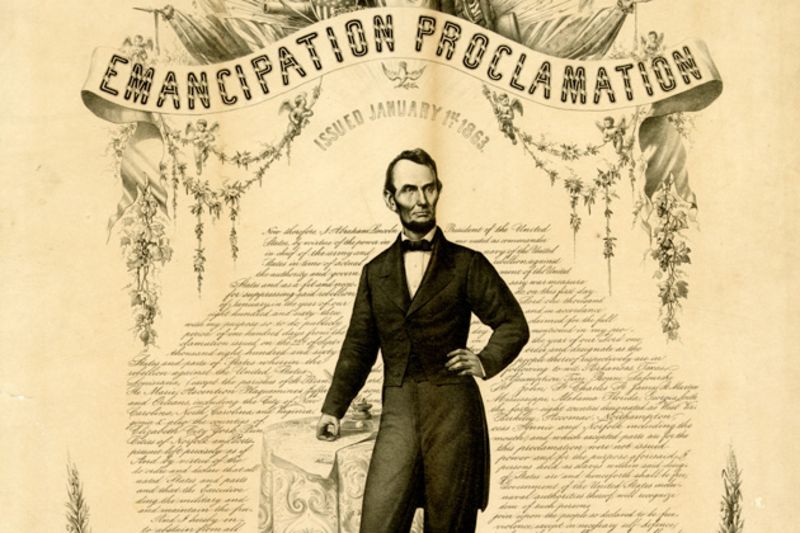
After the Union victory at the Battle of Antietam, Robert E. Lee’s first invasion of the North, Lincoln proclaimed that effective January 1, 1863, all slaves located within areas controlled by the Confederacy “shall be then, thenceforward, and forever free.” Not only did the Emancipation Proclamation exclude the Border States that remained loyal, it also excluded Tennessee and specific counties in Louisiana and Virginia, which had been pacified by the Union Army. Abolitionists decried the Emancipation Proclamation’s legalese and emphasis of military necessity over justice and morals, but Abraham Lincoln wrote the emancipation to convey its constitutionality to proslavery Democrats, Border States, and the Supreme Court (still led by Roger Taney of the Dred Scott decision).

It’s impossible to know how long slavery would have continued had the South not seceded, but prior to 1861 Abraham Lincoln would have considered his presidency a success if he could “rest in the belief that [slavery]  is in the course of ultimate extinction.” By refusing to acquiesce to a majority that desired slavery to stay where it was and not expand, South Carolina put in motion the events that led to its sudden eradication. Declaring slaves free was one thing, however; Lincoln needed to conquer the Confederacy and convince the Border States to emancipate their slaves.

Warren the Worst

By Kaleena Fraga

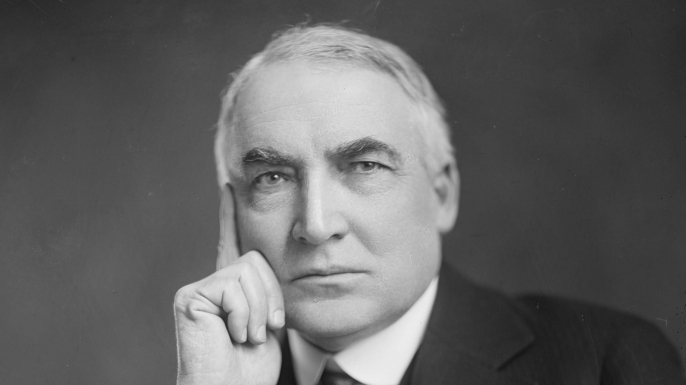
Any list of the nation’s worst presidents is sure to include Warren G. Harding. He is known today for this notoriety, for appointing friends to positions of power and their subsequent corruption, and, of course, those eyebrows.

Wonderful Warren Facts:

  1. As a child, he was called “Winnie.”
  2. He played the cornet (joining presidents like Truman and Nixon who were also musically gifted).
  3.  The 1920 campaign was the first in which women could vote. Harding handily beat his opponent, Democrat James Cox, whose running mate would later make waves of his own–a certain Franklin Delano Roosevelt.
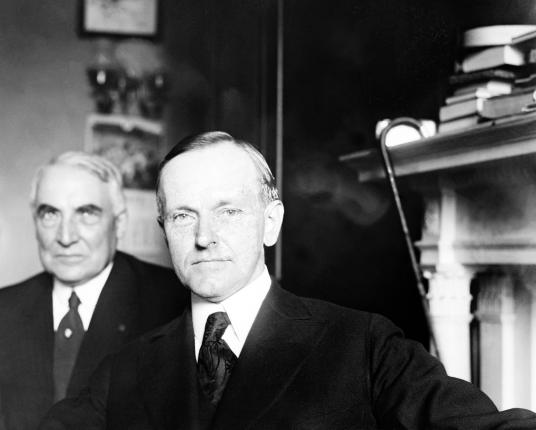
  4. Harding did not finish his term in office–he died in 1923, which propelled his vice president, Calvin Coolidge, to power. He served the shortest term in the 20th century.

coolidge and harding
Harding & Coolidge, in what looks like a presidential selfie

5. Harding once described himself as “a man of limited talents.” He also once said “I am not fit for this office and should never have been here.” He was indeed quite a contrast to his predecessor, Woodrow Wilson, the first president to have a PhD. Harding & Coolidge ran under the slogan “Back to Normalcy” and the Republican party bosses who handpicked Harding chose him because he was undramatic and bland.
6. The Library of Congress recently released a collection of love letters Harding wrote to his mistress between 1910 and 1920. In 1964 after a historian uncovered the letters, Harding’s family made a pact with the Library of Congress that they could release them–but not for 50 years. They’re quite explicit, and make several references to “Jerry”–not a person, but Harding’s name for a part of his body.
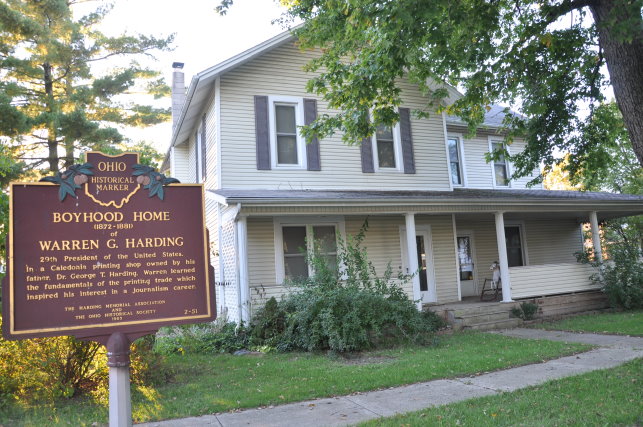
7. He was born in Blooming Grove, Ohio in 1865, the year that Abraham Lincoln was assassinated.
BOYHOOD HOME OF HARDING

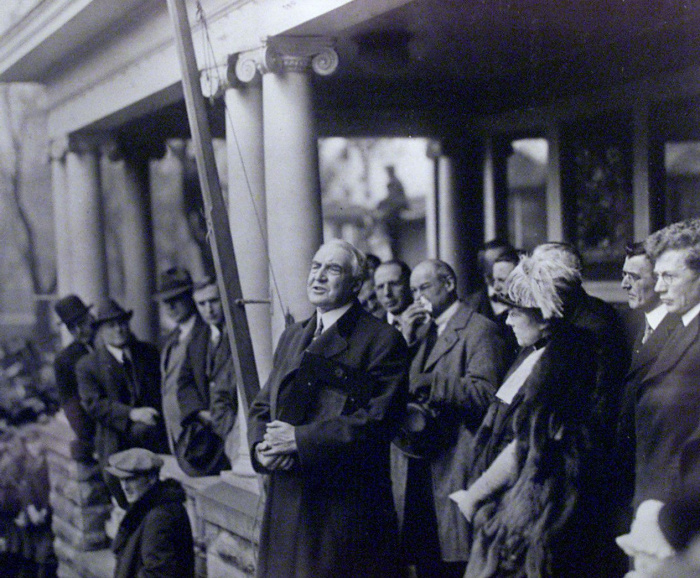
8. With the increased usage of news reels, Harding was able to do much of his campaigning from home, thus creating the concept of a “front porch campaign.”

OHPREZ HARDING JH 1
9. During his campaign, rumors circulated that Harding was part black. This may have been in part because his parents were abolitionists. This has since been disproven. However, Harding did support civil rights. He called for an anti-lynching law in his first address to Congress and once stated that, “unless our democracy is a lie, you must stand for…equality.” Given his short term in office and general ineffectiveness, he was not able to get much done in this area.
10. The “G” in Warren G. Harding stands for “Gameliel.”

The Great Emancipator: Lincoln’s Backwards Backwoods Beginning

PART I

By Duane Soubirous

Heroes of American history are posthumously revered as gods by the Americans who follow them. Look at the ceiling of the U.S. Capitol’s rotunda and see Constantino Brumidi’s “Apotheosis of Washington,” depicting slaveowner George Washington’s ascent into heaven accompanied by the goddess of liberty. Walk into the Parthenon-inspired Lincoln Memorial and read Royal Cortissoz’s epitaph,

IN THIS TEMPLE

AS IN THE HEARTS OF THE PEOPLE

FOR WHOM HE SAVED THE UNION

THE MEMORY OF ABRAHAM LINCOLN

IS ENSHRINED FOREVER

Etched in the walls of the Lincoln Memorial are the Gettysburg Address and the Second Inaugural Address, both written within the last 18 months of Lincoln’s life. His earlier speeches go unmemorialized, like this passage from 1858 endorsing white supremacy:

“I am not, nor ever have been, in favor of bringing about in any way the social and political equality of the white and black races – that I am not nor ever have been in favor of making voters or jurors of negroes, nor of qualifying them to hold office, nor to intermarry with white people.”

W.E.B. DuBois quoted this passage in an editorial written in September 1922, four months after the Lincoln Memorial’s dedication. He believed that Lincoln should be honored as the imperfect human being he was, instead of a legend sculpted in marble:

“No sooner does a great man die than we begin to whitewash him. We seek to forget all that was small and mean and unpleasant and remember the fine and brave and good … and at last there begins to appear, not the real man, but the tradition of the man—remote, immense, perfect, cold and dead!”


Recognizing Abraham Lincoln’s flaws and contradictions doesn’t diminish his legacy, DuBois wrote, but rather enhances the worth and meaning of his upward struggle. “The world is full of people born hating and despising their fellows. To these I love to say: See this man. He was one of you and yet he became Abraham Lincoln.”

This three-part series will chronicle Lincoln’s upward struggle, from denouncing black suffrage to Illinois voters in 1858 to supporting black suffrage in his final speech in 1865, from unsuccessfully opposing the expansion of slavery as a one-term congressman to becoming the president who eradicated it.

Abraham Lincoln grew up on the frontier surrounded by what Frederick Douglass called “negrophobia.” It was common for frontiersmen living in free states to abhor slavery and emancipation alike: both were perceived as threats to the unalienable rights of white men. Lincoln didn’t address slavery in his campaigns for the Illinois State Assembly and U.S. Congress in the 1830s and 1840s, but Congressman Lincoln did support two proposals restricting slavery, neither of which succeeded.

In 1849, Lincoln proposed a gradual emancipation of slaves in the District of Columbia, but his plan wasn’t even brought to a vote. In 1862, after Lincoln signed into law the immediate emancipation of slaves in the capital, Lincoln said, “Little did I dream in 1849, when I proposed to abolish slavery at this capital, and could scarcely get a hearing for the proposition, that it would be so soon accomplished.”

Congressman Lincoln also supported the Wilmot Proviso, named for Pennsylvania Congressman David Wilmot. Wilmot wanted to keep slavery out of all territories gained from the Mexican-American War, giving white men to carte blanche to build a better life out West. The Wilmot Proviso passed in the House but failed in the Senate. Leading the opposition in the Senate was Illinois Senator Stephen Douglas, whom Lincoln challenged in 1858.

“If we could first know where we are, and whither we are tending, we could better judge what to do, and how to do it,” begins Lincoln’s “House Divided” speech, delivered upon securing the Illinois Republican Party’s nomination for Senate. Standing on the sidelines of the political arena in the 1850s, Lincoln observed each branch of government working conjunctively to expand slavery, and worried the United States was tending toward nationalizing slavery.

The Kansas-Nebraska Act of 1854, shepherded through Congress by Senator Douglas, repealed a 34-year-old ban on slavery in the Kansas and Nebraska territories. Douglas insisted he didn’t care whether slavery be voted down or up, “but to leave the people thereof perfectly free to form and regulate their domestic institutions in their own way.” Lincoln attacked this principle of popular sovereignty, defining it this way: “That if any one man, choose to enslave another, no third man shall be allowed to object.”

In President James Buchanan’s inaugural address of 1856, he called on Americans to abide by an upcoming Supreme Court decision, “whatever this may be.” Two days later the Supreme Court issued its Dred Scott decision, ruling that Congress cannot ban slavery in the territories and the Constitution affirms the right to own slaves. This decision alarmed Lincoln. If the Constitution forbids states from denying rights affirmed in the Constitution, and the Supreme Court says the right to own slaves is affirmed in the Constitution, Lincoln reasoned that the Supreme Court would soon rule that states’ bans on slavery were unconstitutional. “We shall lie down pleasantly dreaming that the people of Missouri are on the verge of making their State free; and we shall awake to the reality instead, that the Supreme Court has made Illinois a slave state.”

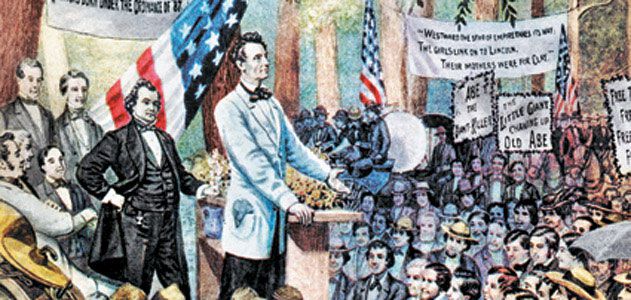
Lincoln and Douglas debated seven times throughout the state. While Lincoln largely appealed to the audiences’ morals in denouncing slavery, Douglas resorted to race baiting. Responding to Lincoln’s assertion that the Declaration of Independence applied to both whites and blacks, Douglas asked how could Jefferson mean to include black people in the words “all men are created equal” when he himself held slaves? Furthermore, if slavery is wrong because the Founding Fathers meant for whites and blacks to be equal, what’s to stop freed slaves from voting, serving on juries, and marrying whites?

Lincoln spent the first three debates trying to dodge Douglas’ assertions that Lincoln believed in full equality for black people. At the fourth debate in Charleston, an especially racist part of the state, Lincoln definitively refuted Douglas: “There is a physical difference between the white and black races which I believe will forever forbid the two races living together on terms of social and political equality.”

In 1858, Illinois’ senators were chosen by the state legislature: the people would vote for state representatives, and whichever party won a majority picked their nominee for Senate. Republicans won the popular vote, but Democrats won a majority of the seats, and Stephen Douglas was reelected as senator. However, Lincoln’s performance in the debates rose him to prominence throughout the North, and when the two ran for president in 1860, Lincoln would emerge the winner.

The President’s Mind: Trump, Reagan, and Mental Health in the Oval Office

By Kaleena Fraga

On Twitter last week, President Trump accused his critics of “taking out the old Ronald Regan playbook and screaming mental instability and intelligence…” Trump later added “Ronald Reagan had the same problem and handled it well. So will I!”

These tweets were in response to reports in the new Michael Wolff book Fire and Fury, which suggest that the president is mentally unfit for his role. Trump’s response attempts to equivocate these suggestions with similar accusations levied against Ronald Reagan in the 1980s. Reagan was later diagnosed with Alzheimer’s, but there is no definitive proof that he suffered from it while in office, or that it inhibited him from performing his duties.

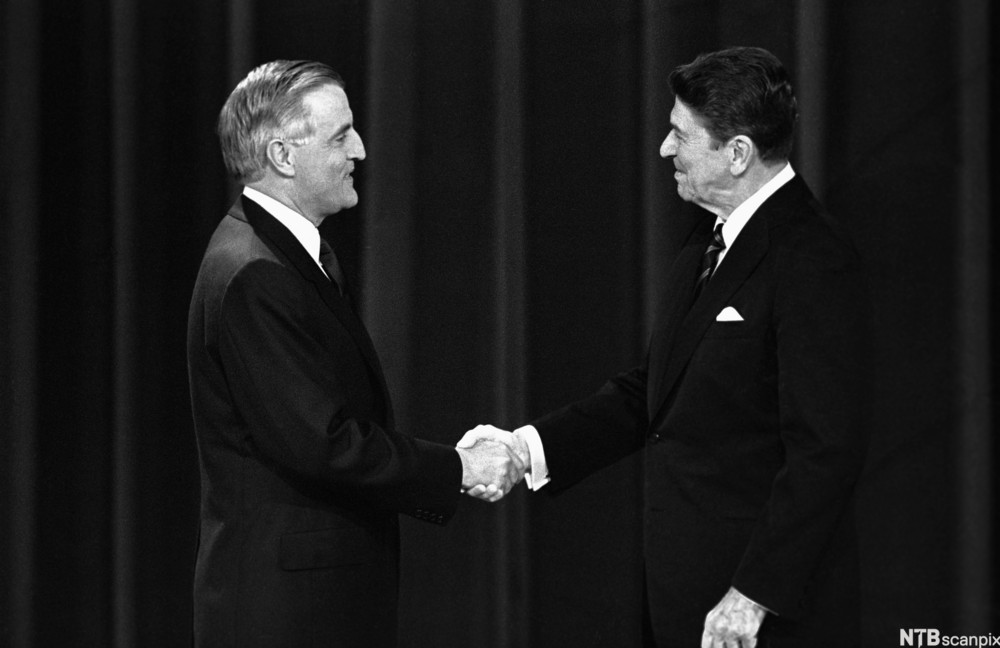
Reagan and Walter Mondale Shaking HandsStill, he did face speculation of diminishing mental capacity during his presidency. In the aftermath of a poor performance in Reagan’s first debate with Democratic challenger Walter Mondale, a New York Times op-ed wrote that there were “legitimate questions that arise when the oldest President in the history of the Republic is seeking re-election to a term that would last from the end of his 73rd year to the end of his 77th…the issue of aging and its effects cannot be avoided.”

Reagan seemed to shake off such doubts in the second debate, when he responded to a probing question about his age by saying:

“I will not make age an issue of this campaign. I am not going to exploit, for political purposes, my opponent’s youth and inexperience.”

In 2011, Ronald Reagan’s son contested his father’s doctors who, at the time of his presidency, had denied seeing any signs of Alzheimer’s. In his book My Father at 100, Reagan suggests that his father did suffer from Alzheimer’s while in office and that, if properly diagnosed, he would have stepped down.

The 25th amendment is supposed to protect the country in the event that the executive is unable to react to the demands of the office. Although it’s been invoked a handful of times since its ratification in 1967 for events like surgery, it’s never been used to permanently remove a president from power.

Trump too faces accusations of a declining mental state. He, like Reagan, is a president in his 70s.  For now, at least, questions of the president’s health are all conjecture. Trump will undergo a physical on January 12th and, although there will be no psychiatric exam, the results will be released to the public.

Then again, according to a recent study, as many as half of all U.S. presidents have suffered from some mental illness. Most for depression–including John Quincy Adams, James Madison, and Abraham Lincoln–and others with probable bipolar disorders, anxiety disorders, and alcohol dependence.