
By Kaleena Fraga
On a late spring day in 1990, Barbara Bush stepped up to the podium at Wellesley College to deliver the school’s commencement address. Her invitation had prompted furor across the student body. To many students at Wellesley, Barbara Bush was no role model. One hundred and fifty students signed a petition which read:
‘Wellesley teaches that we will be rewarded on the basis of our own merit, not on that of a spouse. To honor Barbara Bush as a commencement speaker is to honor a woman who has gained recognition through the achievements of her husband, which contravenes what we have been taught over the last four years at Wellesley.”
Her defenders said the outrage was generational. When asked about the controversy herself, the First Lady said that she understood the students’ perspective. “They’re 21 years old and they’re looking at life from that perspective,” Mrs. Bush said. “I don’t disagree with what they’re looking at. But I don’t think they understand where I’m coming from. I chose to live the life I’ve lived, and I think it’s been a fabulously exciting, interesting, involved life. In my day, they probably would have been considered different. In their day, I’m considered different. Vive la difference.”
Her husband didn’t mince words. In his diary, George H.W. Bush wrote that the “elitist kids” of Wellesley dismissed her accomplishments as a wife, a mother, a volunteer, and a “great leader for literacy.”
Barbara Bush was made of presidential stuff long before she met her husband–she’s a descendent of Franklin Pierce, the 14th president. She and Abigail Adams are also the only women in history to be both a wife and a mother to a president.
 Barbara Bush met her husband at sixteen and married him four years later, after his brush with death during WWII. Before marriage Mrs. Bush had enrolled in Smith College–she was a voracious reader as a girl–and helped out in the war effort by working at a nuts and bolts factory in the summer of 1943. As the wife of George H.W. Bush–who, over the course of their marriage, was the Ambassador to the United Nations, the Director of the C.I.A., and the Vice President of the United States–Mrs. Bush had the opportunity to see the world. She oversaw moving her family twenty-nine times.
Within a few weeks of her husband’s inauguration to the presidency in 1989, Barbara Bush made literacy her cause as First Lady. At the launch of the Barbara Bush Foundation for Family Literacy, Mrs. Bush stated that, “In 10 years of traveling around the United States of America, visiting literary programs, libraries, kindergarten groups, day-care centers, single-parent classes for high school dropouts, public housing projects, food banks – you name it, I’ve visited it – it has become very apparent to me that we must attack the problem of a more literate America through the family. We all know that adults with reading problems tend to raise children with reading problems.” The foundation today is active in all 50 states. It seeks to support parents who are improving their reading level, with the goal that the parents will read to their children.
Although during her husband’s presidency Barbara Bush rarely drew attention on her 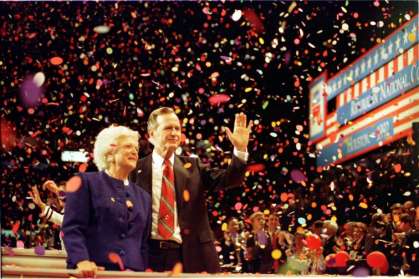 own political views, she was more outspoken before and after H.W.’s term in office. During his vice presidential run she expressed support for the ratification of the Equal Rights Amendment and embrace pro-choice views on abortion. During the 1992 presidential campaign, Mrs. Bush stated that the abortion debate had no place in the party platform at all. Abortion, she said, “was a personal thing.”
Barbara Bush would also redefine the role of first spouses when she became the first First Lady to deliver prepared remarks at the 1992 Republican Convention. During the (increasingly bitter) campaign, Mrs. Bush also defended Hillary Clinton, who was under fire for her own outspoken political views.
As for that speech in 1990, Barbara Bush (whose husband voted for Hillary Clinton in 2016) left the Wellesley class of ’90 with this:
“Who knows? Somewhere out in this audience may even be someone who will one day follow in my footsteps and preside over the White House as the president’s spouse–and I wish him well.”

 Nellie herself was bright–she had a gift for languages, and studied French, German, Latin and Greek. She wrote in her diary that, “A book has more fascination for me than anything else.” Nellie wanted to continue her education–her brothers went to Yale and Harvard–but her father told her he could not afford to send her to college. Anyway, she was expected to find herself a husband, instead.
 Although some muttered that Nellie should focus more on “the simple duties of First Lady,” Nellie was equally eager to expand this role. Upsetting many New Yorkers, Nellie stated that she wanted to make Washington D.C. a social hub for Americans. Nellie set out to beautify the city. From her time abroad, Nellie had fallen in love with Japanese cherry trees and brought one hundred to Washington. When the mayor of Tokyo heard of this project, he sent 2,000 more.
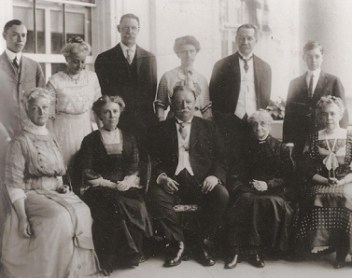 dreamed of in Taft’s administration. It certainly wanted for her influence. Without her, Taft was not able to play the dynamic social role he needed to fill the shoes of his bombastic predecessor, Theodore Roosevelt.


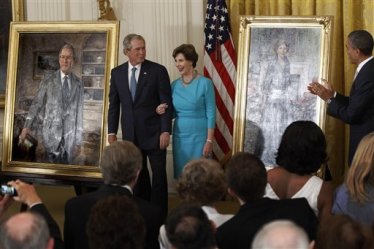 unveiling of their official portraits. Bush’s father and fellow president George H.W. Bush tagged along too. It was a light hearted occasion, with friendly barbs on both sides.
 In 1989, Ronald and Nancy Reagan were invited to the White House for the unveiling of their official portraits. Reagan
 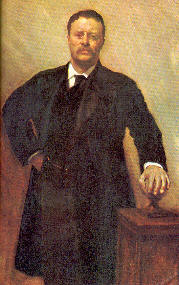 because he thought it made him look like a “mewing cat.” The second painter he hired, John Singer Sargent, found him to be a


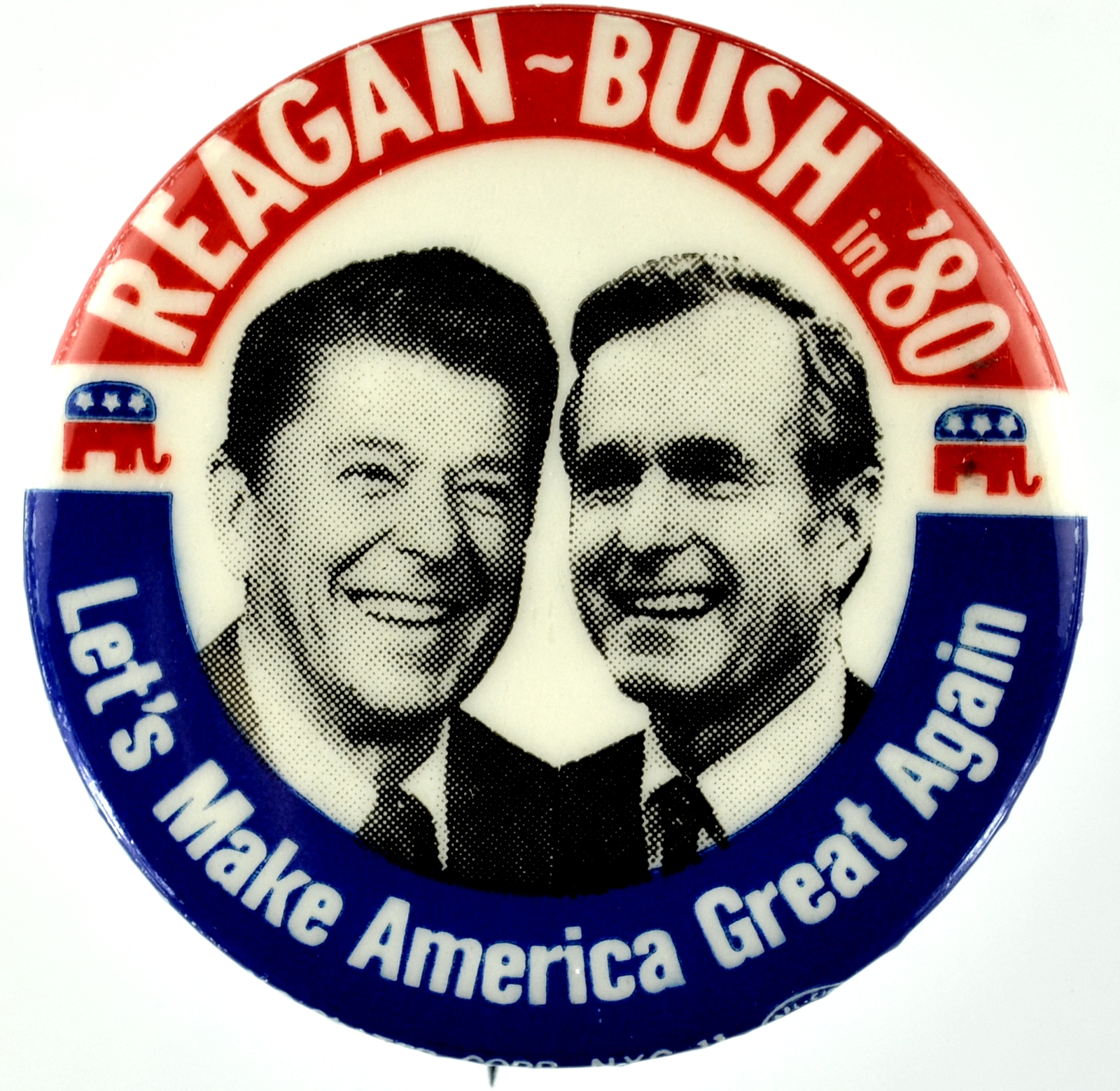 4. Reagan-Bush ran a slogan in 1980 that will sound familiar to many Americans today: “Let’s Make America Great Again.”
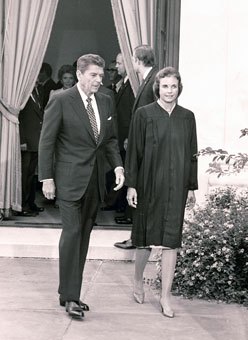 enthusiastic. The New York Times called the run up to the endorsement “one of Washington’s longest-running and least suspenseful political dramas,” after Reagan insisted on waiting for the end of the Republican primary to announce his pick. Despite his nickname as the “Great Communicator” and Bush’s eight years of service as VP, Reagan flubbed Bush’s name during the endorsement, pronouncing it George Bosh.

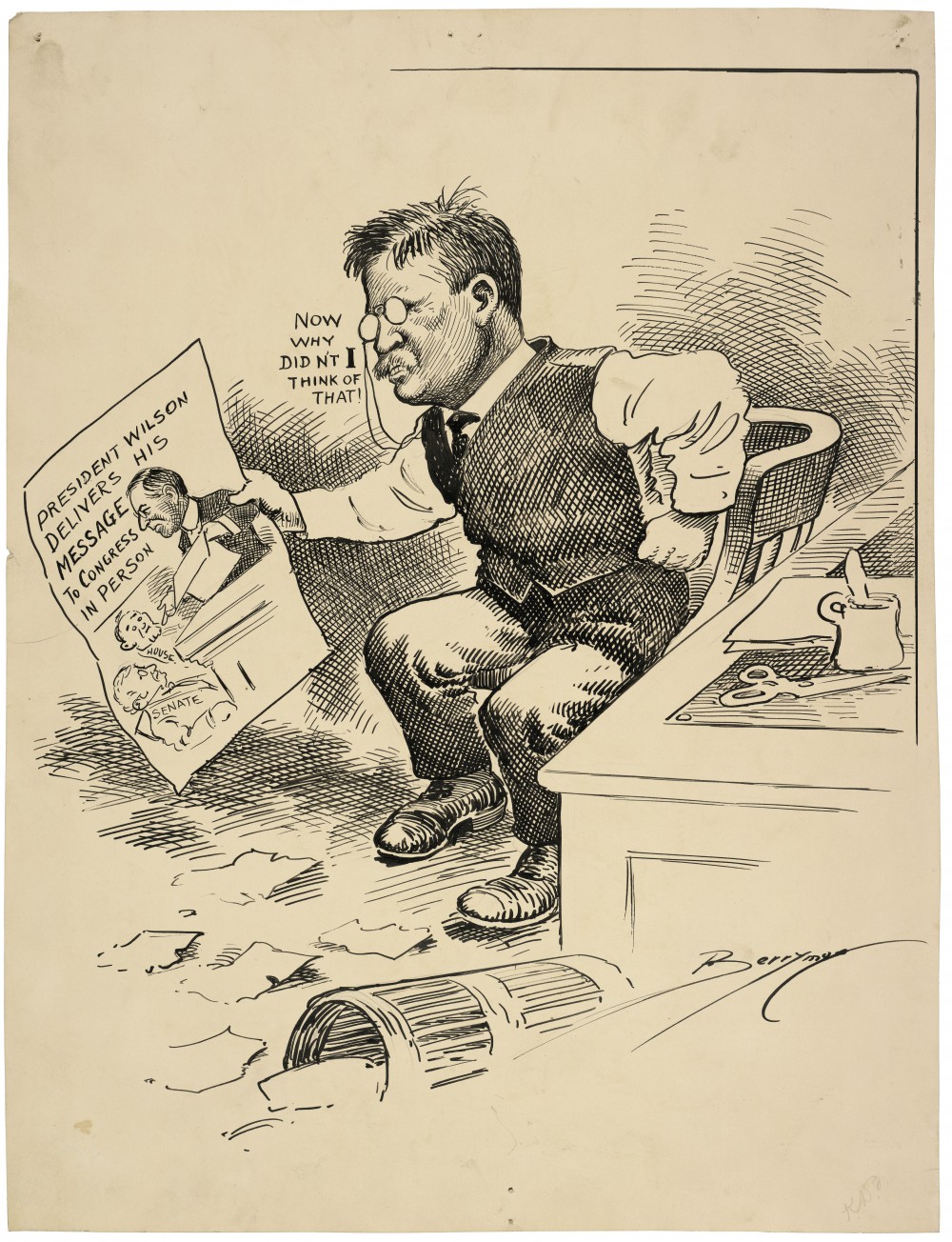
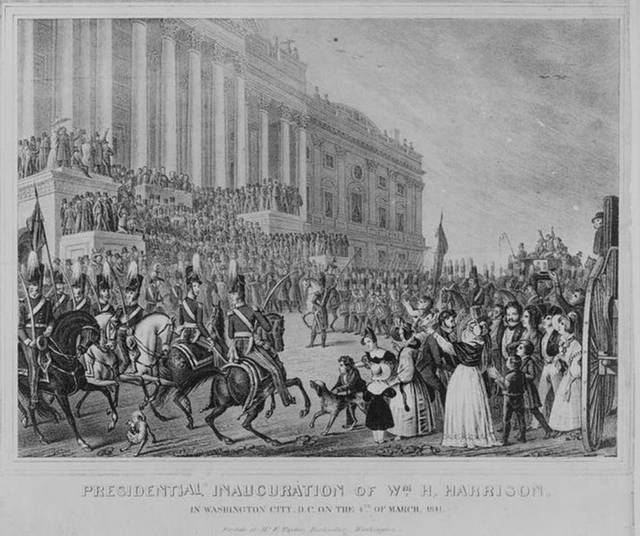
 twenty-eight minutes. Each of his addresses to Congress were around or above the one hour mark. His speech was also the longest at 9,190 words (Washington’s, by comparison, was the shortest at 1,089 words).
 History First