By Kaleena Fraga
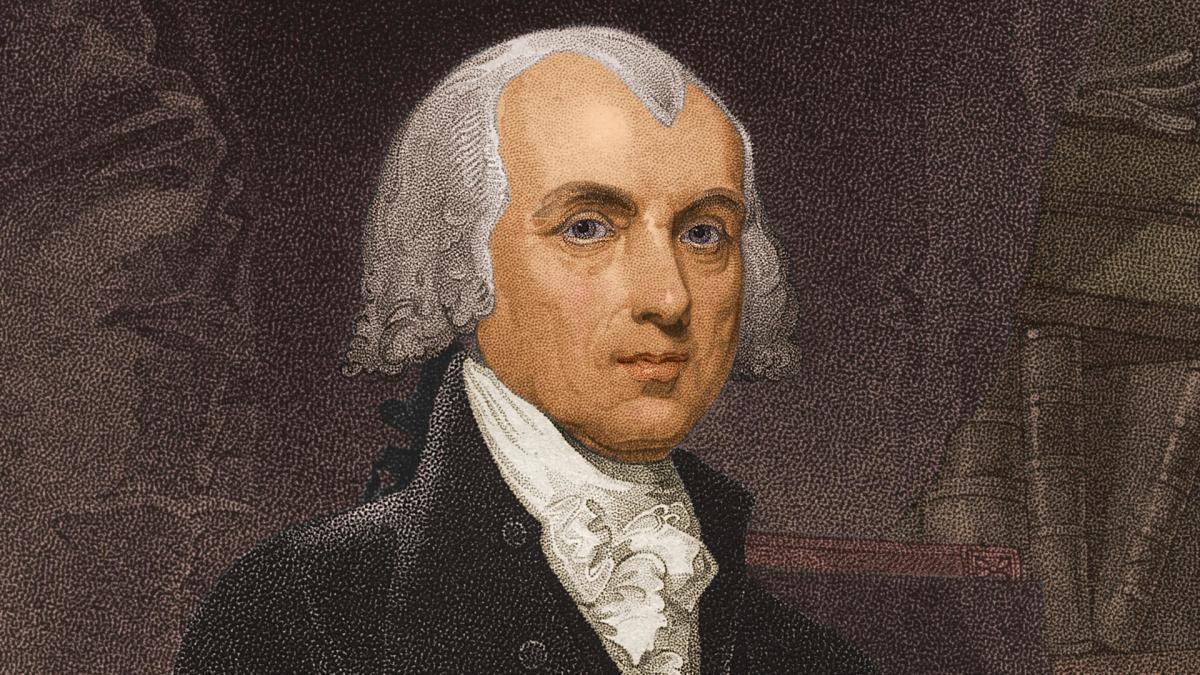
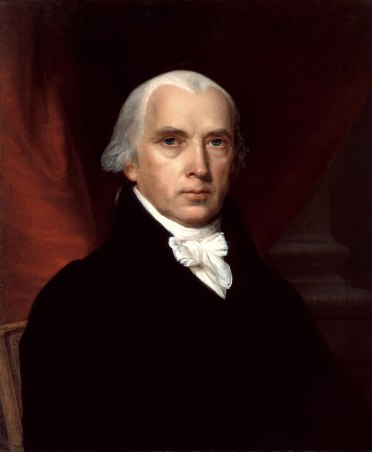
When James Madison died on this day in 1836, he was the last surviving signer of the U.S. Constitution. Because his fellow ex-presidents John Adams, Thomas Jefferson, and James Monroe had serendipitously died on July 4th, Madison’s doctor offered to prolong his life so that he too could die on the July 4th anniversary. Madison refused. He died six days before the 60th anniversary of the nation’s birth.
As Madison’s family gathered around his deathbed, one of his nieces noticed a shift in her uncle’s expression. When she asked him if he was alright, he responded with his last words: “Nothing more than a change of mind, my dear.”
Madison, often called the Father of the Constitution, accomplished a lot in the early history of the United States, including his two terms as president. (One of History First’s favorite political facts is that the U.S. has only had three consecutive two term presidents twice–Jefferson, Madison, Monroe and Clinton, Bush, Obama). But on this anniversary of his death, we’ll focus on a lesson Madison learned early on. Madison, who once read the histories of every confederacy ever in order to systematically analyze what could work and what wouldn’t in the young United States, only had to learn his lessons once.
In 1777 Madison ran for the Virginia Assembly. These elections–nine months after independence was declared–would be the first elections which Virginia’s white male citizens could participate. County-based elections at the time had a festive atmosphere, and were treated like a public holiday. Those running for election customarily provided alcohol–beer and whiskey–to their voters.
According to Madison biographer Noah Feldman, from his work the The Three Lives of James Madison: Genius, Partisan, President, there was a symbolic meaning to to this arrangement. “In a culture that emphasized deference to authority,” Feldman writes, “the candidates were presenting themselves as generous, gracious men of means, pleased to indulge the (slightly) lower orders.”
Madison at the time was flush with republican spirit, and the belief that all men were created equal. To provide alcohol to voters, he reasoned, would be akin to buying their votes. He believed that this election should reflect “the purity of moral and of republican principles.” Voters, he thought, could do their civic duty without the “the corrupting influence of spiritous liquors, and other treats.”
Big mistake.
Although Madison decided his voters would be flattered that he treated them as equals, and as men incorruptible by liquor, he had erred. Voters saw Madison’s decision to withhold alcohol as an expression of “pride or parsimony.” His opponent, Charles Porter, was a tavern keeper who happily provided alcohol to the gathered voters. Porter won the election.
“The ordinary voter,” writes Feldman, “did not want to have a pint of ale with James Madison; and the feeling, Madison demonstrated, was mutual.”
Madison learned his lesson. He’d never again fail to provide alcohol and “treats” to his voters. In any case, his legacy grew to overshadow a single lost election early in his political career.


 come to formally greet him–in fact, he was


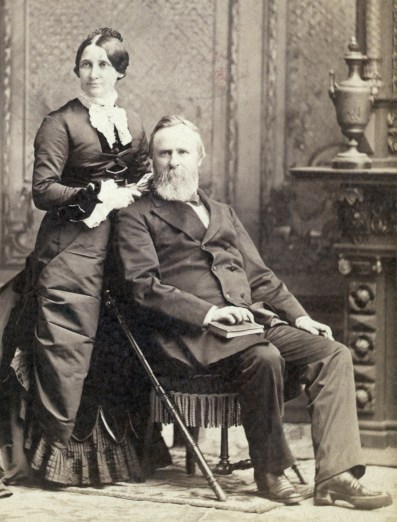 young teenager. Her brothers were studying at the University, and Lucy attended college prep courses. Too young to establish a relationship, they reunited years later when they were both members of a wedding party and married in 1852 when he was thirty and she was twenty-one. Lucy was a major influence on Hayes’ life during his entry into politics. The Ohio-born Hayes followed a fairly typical trajectory to the White House, checking off many of the most common boxes for U.S. presidents—he was educated at Harvard Law School and opened a law practice before serving in the military, then became a Congressman, and then Governor of Ohio. He won the presidency as the Republican nominee in 1876 and moved with Lucy and their family to Washington.
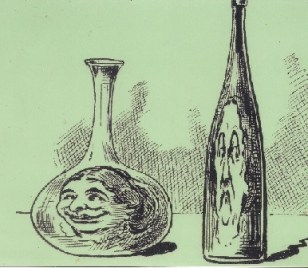 The “Lemonade Lucy” moniker was not a title used during Lucy’s lifetime, but a name used by journalists, political cartoonists, and historians to poke fun at the strict nature of the First Family of teetotalers. Later historians credited Lucy’s husband with the decision not to serve liquor in the White House. As Emily Apt Greer, author of F
 Edith met Woodrow Wilson during a chance encounter at the White House. His first wife, Ellen, had died of Bright’s disease only seven months earlier. They had a quick and passionate courtship which
  answer to what the government should do if the president became unable to perform his duties. Wilson wasn’t dead, so there didn’t seem to be a reason for the vice president to step into his role. Without the 25th amendment, Congress and the Cabinet had no real power to act (and the extent of Wilson’s condition was kept top secret). To Edith, protective of her husband and his presidency, the answer was clear.
 Lincoln wasn’t exactly smitten with Mary Todd. After they got engaged, Lincoln had second thoughts and he tried to get out of their engagement. Several of Lincoln’s friends recollected his misgivings about Mary, which Michael Burlingame documented in his book
  General Ulysses S. Grant at his first appearance in Washington, D.C. as the top general in the Union army. That reception, a journalist noted, was the first time Abraham Lincoln wasn’t the center of attention in the East Room. Grant was elected president in the first election after Lincoln’s assassination. He might have been assassinated with Lincoln on April 14, 1865, if Mary Todd Lincoln hadn’t thrown a tantrum a few weeks earlier in front of Grant’s wife Julia Dent Grant. Even though the morning newspaper reported that the Lincolns and the Grants would attend a showing of
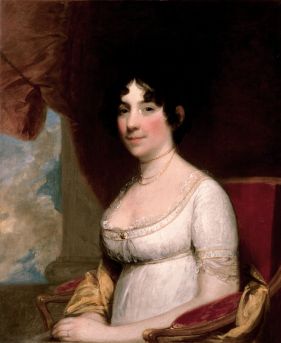 In David McCullough biography’s of Madison-foe John Adams, the nation’s fourth president is described as “a tiny, sickly-looking man who weighed little more than a hundred pounds and dressed always in black.” When Dolley Madison caught his eye and he asked for an audience with her (bonus trivia: mutual friend Aaron Burr set them up), she wrote her sister that “the great, little Madison” wanted to meet her. Great because of Madison’s political reputation; little because at 5’7, Dolley Madison was several inches taller than her future husband.
 the James Madison biography The Three Lives of James Madison by Noah Feldman, Feldman writes that Dolley was instrumental in forming Madison’s ability to converse with diplomats and their wives. “Under Dolley’s tutelage,” Feldman writes, “Madison developed what would become a lifelong habit of telling witty stories after dinner, the ideal venue for his particular brand of dry wit.”
 wanted to wait for his return. According to an account by Paul Jennings, a man born into slavery at Madison’s estate of Montpelier and then working at the White House, the table had been set for dinner when a rider came charing to the mansion with the message that they must evacuate immediately. Dolley wrote her sister that she insisted on waiting until they could unscrew the portrait of George Washington from the wall.
 History First