By Kaleena Fraga
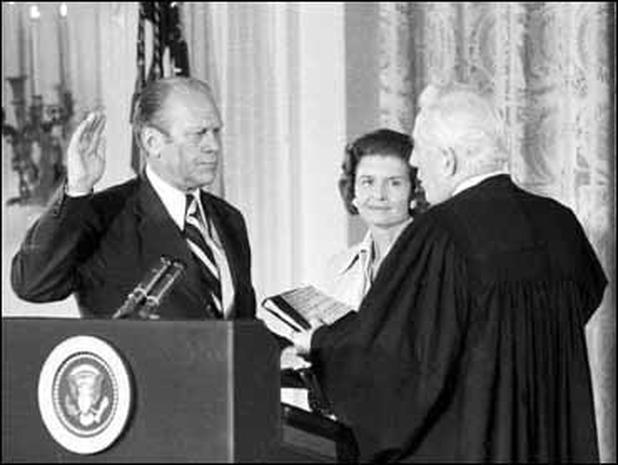
When Richard Nixon departed the White House on August 9th, 1974, becoming the first president to resign from the office, he made Gerald Ford the first unelected president in American history.
As Nixon took off in his helicopter, Ford took the oath of office. After taking the oath, Ford gave a short speech which he said was not “an inaugural address, not a fireside chat, not a campaign speech–just a little straight talk among friends.” Ford went onto say that he was well aware that he had not been elected by American ballots, but he hoped he would be confirmed through American prayers.
Then Ford uttered the words that became enshrined in American memory.
“My fellow Americans, our long national nightmare is over.”
He continued:
Our Constitution works; our great Republic is a government of laws and not of men. Here the people rule. But there is a higher Power, by whatever name we honor Him, who ordains not only righteousness but love, not only justice but mercy.
As we bind up the internal wounds of Watergate, more painful and more poisonous than those of foreign wars, let us restore the golden rule to our political process, and let brotherly love purge our hearts of suspicion and of hate.
Ford entered the White House with a list of issues to tackle. There was the Cold War, the end of the war in Vietnam, unrest in the Middle East, and inflation, among other things. Not to mention he had to define his presidency as independent from Nixon’s, while serving out the rest of Nixon’s second term.
Ford had to move his family into the White House; he had to address a divided and bitter nation; and he had to deal with the question that had been born even before he took the oath of office, of whether or not he should pardon Richard Nixon for any crimes associated with Watergate.
 Ford and his family would not move to the White House until 10 days into his term, and in the meantime Ford would continue to commute from his home in Alexandria, Virginia. The images of Ford leaving his home, looking very much like a regular businessman on his way to work, and not the leader of the free world, obscures the reality of the heavy burden which had fallen on his shoulders. Betty Ford, who had remarked at the beginning of Ford’s political career that she was “unprepared to be a political wife” but was unworried because she “didn’t think he was going to win” would leave her own mark on the presidency and the role of First Lady. Only a month into the role she held her first press conference and answered questions about women in politics, abortions, and the Equal Rights Amendment. She would also bring awareness to breast cancer and addiction, acknowledging her struggles with both.
As the question of a Nixon pardon floated in the air–Alexander Haig, the chief of staff under Nixon and Ford had first broached the issue with the new president 10 days before Nixon’s resignation–one of Ford’s first acts as president was to address Congress. He did so three days after taking the oath of office.
“I am not here to make an inaugural address,” Ford said. “The nation needs action, not  words…my fellow Americans, we have a lot of work to do.” To Congress he said, “I do not want a honeymoon with you. I want a good marriage.” Ford, who had climbed the ropes in Washington as a member of Congress, seemed uniquely able to build such a relationship. Yet he would veto 66 bills passed by the Democratic Congress, many of which were then overridden by Congress–the largest percentage of overrides since Congress overrode Andrew Johnson’s vetoes following his unexpected ascension to the presidency.
Ford later reflected: “When I was in the Congress myself, I thought it fulfilled its constitutional obligations in a very responsible way, but after I became president, my perspective changed.”
The decision to pardon Nixon came about a month after Ford took office, and was initially met with outrage and opposition from the country and from many of Watergate’s main players. Although Bob Woodward and Carl Bernstein initially met the news of the pardon with dismay, they much later acknowledged that Ford had made the right choice. Woodward called the pardon “an act of political courage”, with Bernstein agreeing that the pardon took “great courage.”
Despite the retrospective, Ford erased any good will he may have had in his first weeks in the presidency by pardoning Nixon. He set himself up for a tough reelection, in which he would be challenged by a right-leaning upstart named Ronald Reagan, and would eventually lose to Democrat Jimmy Carter.
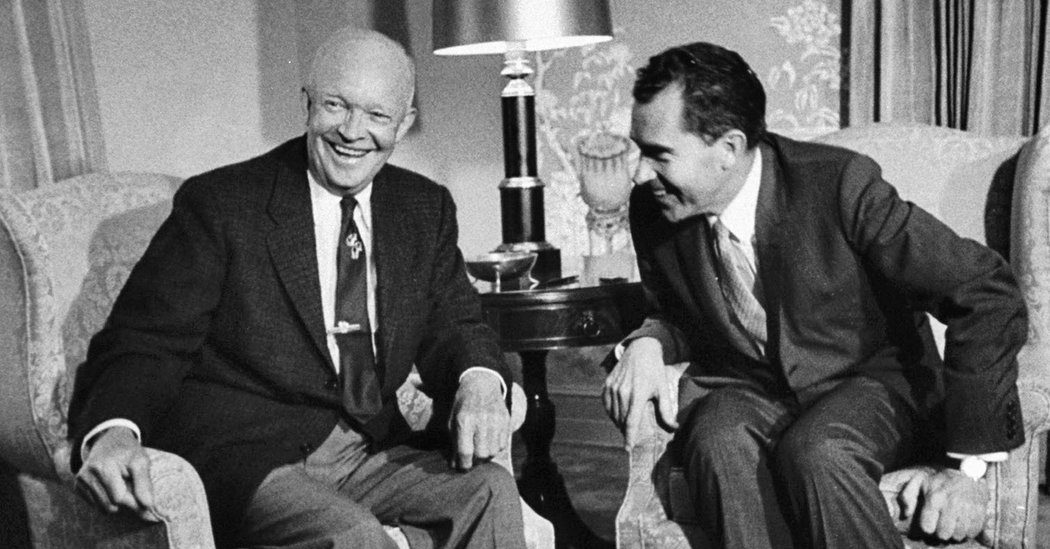
 While Eisenhower maintained a healthy distance from the campaign, Nixon leapt into the fray. He put up a fight for the presidency that would embitter many against him for the rest of his political career, including Harry Truman, who interpreted Nixon’s messaging as a sly way of calling him a traitor. (Truman would later insist that Nixon had personally accused him of treason, although no evidence exists to support this). Even in Nixon’s lowest point of the campaign–when he was forced to defend his use of a political slush fund in the now famous “Checkers” speech–he was sure to add at the end that electing Eisenhower was important because the Democrats had left the government riddled with Communists and corruption.
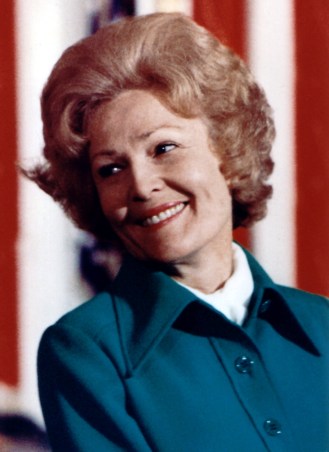 In honor of Women’s History Month, History First is going to spend some time talking about the women standing beside American presidents. First–one of our favorites: Pat Nixon.
 Still, the two came from similar backgrounds of hard work and tough luck, and Pat seems to have changed her mind. Two years after they met, she accepted his proposal of marriage.
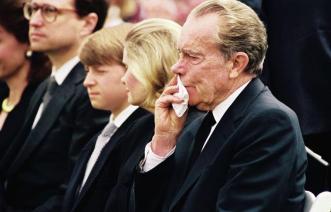 The marriage was far from perfect–Pat once wrote a friend that when it came to household chores, “Dick is always too busy, at least his story, so I do all the lugging, worrying and cussing,”–but their relationship remained solid. It takes only a look at Richard Nixon’s face at the funeral of his wife to see the impact she had on him. And not only him–but the on the lives of the hundreds of thousands of Americans who visit the White House, and the First Ladies who followed in her footsteps and her example.


 History First