The Great Emancipator: Lincoln’s Backwards Backwoods Beginning

PART I

By Duane Soubirous

Heroes of American history are posthumously revered as gods by the Americans who follow them. Look at the ceiling of the U.S. Capitol’s rotunda and see Constantino Brumidi’s “Apotheosis of Washington,” depicting slaveowner George Washington’s ascent into heaven accompanied by the goddess of liberty. Walk into the Parthenon-inspired Lincoln Memorial and read Royal Cortissoz’s epitaph,

IN THIS TEMPLE

AS IN THE HEARTS OF THE PEOPLE

FOR WHOM HE SAVED THE UNION

THE MEMORY OF ABRAHAM LINCOLN

IS ENSHRINED FOREVER

Etched in the walls of the Lincoln Memorial are the Gettysburg Address and the Second Inaugural Address, both written within the last 18 months of Lincoln’s life. His earlier speeches go unmemorialized, like this passage from 1858 endorsing white supremacy:

“I am not, nor ever have been, in favor of bringing about in any way the social and political equality of the white and black races – that I am not nor ever have been in favor of making voters or jurors of negroes, nor of qualifying them to hold office, nor to intermarry with white people.”

W.E.B. DuBois quoted this passage in an editorial written in September 1922, four months after the Lincoln Memorial’s dedication. He believed that Lincoln should be honored as the imperfect human being he was, instead of a legend sculpted in marble:

“No sooner does a great man die than we begin to whitewash him. We seek to forget all that was small and mean and unpleasant and remember the fine and brave and good … and at last there begins to appear, not the real man, but the tradition of the man—remote, immense, perfect, cold and dead!”


Recognizing Abraham Lincoln’s flaws and contradictions doesn’t diminish his legacy, DuBois wrote, but rather enhances the worth and meaning of his upward struggle. “The world is full of people born hating and despising their fellows. To these I love to say: See this man. He was one of you and yet he became Abraham Lincoln.”

This three-part series will chronicle Lincoln’s upward struggle, from denouncing black suffrage to Illinois voters in 1858 to supporting black suffrage in his final speech in 1865, from unsuccessfully opposing the expansion of slavery as a one-term congressman to becoming the president who eradicated it.

Abraham Lincoln grew up on the frontier surrounded by what Frederick Douglass called “negrophobia.” It was common for frontiersmen living in free states to abhor slavery and emancipation alike: both were perceived as threats to the unalienable rights of white men. Lincoln didn’t address slavery in his campaigns for the Illinois State Assembly and U.S. Congress in the 1830s and 1840s, but Congressman Lincoln did support two proposals restricting slavery, neither of which succeeded.

In 1849, Lincoln proposed a gradual emancipation of slaves in the District of Columbia, but his plan wasn’t even brought to a vote. In 1862, after Lincoln signed into law the immediate emancipation of slaves in the capital, Lincoln said, “Little did I dream in 1849, when I proposed to abolish slavery at this capital, and could scarcely get a hearing for the proposition, that it would be so soon accomplished.”

Congressman Lincoln also supported the Wilmot Proviso, named for Pennsylvania Congressman David Wilmot. Wilmot wanted to keep slavery out of all territories gained from the Mexican-American War, giving white men to carte blanche to build a better life out West. The Wilmot Proviso passed in the House but failed in the Senate. Leading the opposition in the Senate was Illinois Senator Stephen Douglas, whom Lincoln challenged in 1858.

“If we could first know where we are, and whither we are tending, we could better judge what to do, and how to do it,” begins Lincoln’s “House Divided” speech, delivered upon securing the Illinois Republican Party’s nomination for Senate. Standing on the sidelines of the political arena in the 1850s, Lincoln observed each branch of government working conjunctively to expand slavery, and worried the United States was tending toward nationalizing slavery.

The Kansas-Nebraska Act of 1854, shepherded through Congress by Senator Douglas, repealed a 34-year-old ban on slavery in the Kansas and Nebraska territories. Douglas insisted he didn’t care whether slavery be voted down or up, “but to leave the people thereof perfectly free to form and regulate their domestic institutions in their own way.” Lincoln attacked this principle of popular sovereignty, defining it this way: “That if any one man, choose to enslave another, no third man shall be allowed to object.”

In President James Buchanan’s inaugural address of 1856, he called on Americans to abide by an upcoming Supreme Court decision, “whatever this may be.” Two days later the Supreme Court issued its Dred Scott decision, ruling that Congress cannot ban slavery in the territories and the Constitution affirms the right to own slaves. This decision alarmed Lincoln. If the Constitution forbids states from denying rights affirmed in the Constitution, and the Supreme Court says the right to own slaves is affirmed in the Constitution, Lincoln reasoned that the Supreme Court would soon rule that states’ bans on slavery were unconstitutional. “We shall lie down pleasantly dreaming that the people of Missouri are on the verge of making their State free; and we shall awake to the reality instead, that the Supreme Court has made Illinois a slave state.”

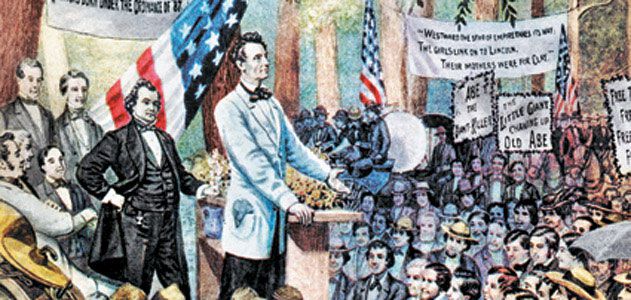
Lincoln and Douglas debated seven times throughout the state. While Lincoln largely appealed to the audiences’ morals in denouncing slavery, Douglas resorted to race baiting. Responding to Lincoln’s assertion that the Declaration of Independence applied to both whites and blacks, Douglas asked how could Jefferson mean to include black people in the words “all men are created equal” when he himself held slaves? Furthermore, if slavery is wrong because the Founding Fathers meant for whites and blacks to be equal, what’s to stop freed slaves from voting, serving on juries, and marrying whites?

Lincoln spent the first three debates trying to dodge Douglas’ assertions that Lincoln believed in full equality for black people. At the fourth debate in Charleston, an especially racist part of the state, Lincoln definitively refuted Douglas: “There is a physical difference between the white and black races which I believe will forever forbid the two races living together on terms of social and political equality.”

In 1858, Illinois’ senators were chosen by the state legislature: the people would vote for state representatives, and whichever party won a majority picked their nominee for Senate. Republicans won the popular vote, but Democrats won a majority of the seats, and Stephen Douglas was reelected as senator. However, Lincoln’s performance in the debates rose him to prominence throughout the North, and when the two ran for president in 1860, Lincoln would emerge the winner.

A Busy Day for JFK (& RMN)

By Kaleena Fraga

January 3rd is a day that holds special significance for John F. Kennedy. In 1947, it was the day that he was sworn into Congress for the first time as a member of the House of Representatives. On January 3rd in 1960, 13 years later, it was reported that JFK had thrown his hat in the ring to be the next president.

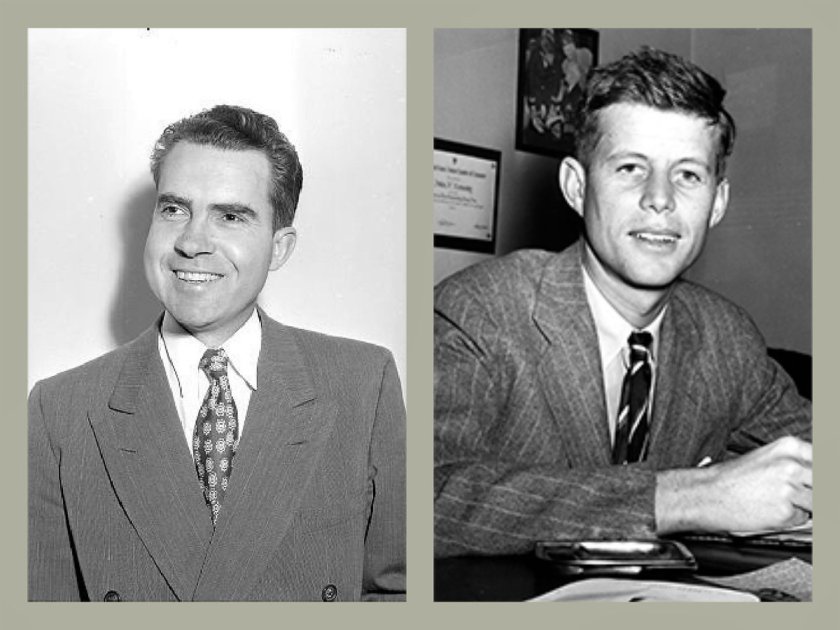
JFK wasn’t the only young Congressman to be sworn in that day in 1947. He was joined by his future political rival Richard Nixon.

jfkrmn
Richard Nixon and John F. Kennedy, circa 1947

Although they would face each other in the bitterly contested election of 1960, Kennedy and Nixon were friendly in the House. According to the 2017 Nixon biography Richard Nixon: The Life by John A. Farrell, the two young congressmen once shared a train car back to D.C. after a cordial debate in West Virginia. They bonded over their passion for international affairs. “Neither one of us was a backslapper,” Nixon wrote later. “He was shy…but it was a shyness born of an instinct that guarded privacy and concealed emotion. I understood these qualities because I shared them.” The Nixons were later invited to attend Jack Kennedy’s wedding.

When Nixon ran for Senate he had the support of the Kennedy clan. According to Farrell’s biography, John Kennedy stopped by Nixon’s office with a check from his father for one thousand dollars. The message? Joseph Kennedy wanted Nixon to win.

By 1960, the two would be rivals. Although Kennedy had followed Nixon to the Senate, Nixon had become Dwight D. Eisenhower’s vice president. While Kennedy finished his Senate term, Nixon spent eight years traveling the world on Ike’s behalf. In 1960 Nixon would argue experience; Kennedy would insist that after eight years of Ike, the country was ready for something new. Kennedy officially announced his candidacy on January 2nd–on January 3rd the announcement made front page news as Kennedy added his name to a growing list of White House-hungry Democrats. A week later, on January 9th, Richard Nixon likewise declared his candidacy.

jfkdeclares

On another January day in 1961, Nixon (the outgoing vice president) would stand behind Kennedy to watch his rival take the oath of office.

inagjfk
January 1961. Nixon is standing behind Kennedy, to the right of the frame

Although the Nixon/Kennedy relationship soured, Nixon later penned a thoughtful note to Jackie Kennedy following her husband’s assassination in Dallas in 1963.

“Dear Jackie

In this tragic hour Pat and I want you to know that our thoughts and prayers are with you. While the hand of fate made Jack and me political opponents I always cherished the fact that we were personal friends from the time we came to the Congress together in 1947…If in the days ahead we could be helpful in any way we shall be honored to be at your command.

Sincerely,
Dick Nixon”

Jackie later replied, thanking Nixon for his note, and writing:

“Dear Mr. Vice President –

I do thank you for your most thoughtful letter –

You two young men – colleagues in Congress – adversaries in 1960 – and now look what has happened – Whoever thought such a hideous thing could happen in this country –…please be consoled by what you already have – your life and your family…

Sincerely

Jacqueline Kennedy”

See full letters here and here


A Brief History of Impeachment

By Kaleena Fraga

Benjamin Franklin noted that throughout history, once political leaders had “rendered [themselves] obnoxious,” the people had no other choice but to assassinate them. Instead, Franklin thought, the Constitution should allow Congress to punish the president when he deserved it, but also give him a trial to prove his innocence.

This week has a couple of significant impeachment anniversaries. First, Bill Clinton was impeached by the House of Representatives on December 19th, 1998. He faced charges of perjury and obstruction of justice related to his affair with White House intern Monica Lewinsky. To the charge of perjury, five Republicans broke from the party and voted against impeachment. However, five Democrats also voted for impeachment. Two other charges–another perjury charge and one abuse of power charge–were defeated.

Clinton would go on to be acquitted in the Senate. A two-thirds majority would have been needed to convict him–the perjury charge was rejected 55 to 45 and the Senate was split 50-50 on obstruction of justicewsj.jpg. Democrats voted together, against impeachment, and they were joined by five Republicans on the obstruction-of-justice charge.
It had been 131 years since a president faced an impeachment hearing–Andrew Johnson was similarly impeached by the House but acquitted by the Senate in 1868. Johnson’s charges were quite different from Clinton’s–the House accused him of violating the Tenure of Office Act–but both men faced Congresses hostile to their presidencies.

In between Johnson and Clinton sits Richard Nixon, who was not impeached but who faced impeachment charges. He resigned before the trial began.

Also on December 19th was the swearing in of Nelson Rockefeller as vice president. Nixon’s vice president, Gerald Ford, had become president when his predecessor chose to resign rather than be impeached. Ford then had the power to appoint his own vice president (pending Senate confirmation) just as Nixon had appointed him when his original vice president, Spiro Agnew, resigned following accusations of corruption and tax fraud.

This must have especially stung for Nixon, who had faced Rocky as a political rival in the 1960 and 1968 elections.

In contentious and politically divided times, the “I” word is often thrown around. Billionaire Tom Steyer is currently offering 10 million dollars to anyone who provides information that leads to Donald Trump’s impeachment. At town halls during the Obama presidency, some Republican leaders agreed with their constituents that Obama should be impeached, but none ever drew up charges against him.

Has the nation treated impeachment as the founders intended? They disagreed on the matter themselves. Many–uncomfortable with the idea of removing an executive from power, as this sort of thing had never been tried with, say, a king–argued that the legislative branch would abuse its power. Elbridge Gerry (of gerrymandering infamy) protested that a good president shouldn’t have to worry about a legislature which honorably represented the people’s interests. “A good magistrate will not fear them,” he said. “A bad one ought to be kept in fear of them.”

Millions of Cracks in the Glass Ceiling: Women, the White House, and the Path Ahead

By Molly Bloom

The American political system has changed significantly in the nearly one hundred years since the passing of the 19th amendment in 1920 that granted women the right to vote. Not only were women provided a new right to contribute to the government, but slowly, women began to occupy federal positions as well.

jr for congressFour years before the 19th amendment was ratified, Jeanette Rankin became the first woman elected to the House of Representatives. Six years later, Rebecca Felton filled an interim seat for only one day as a United States Senator (an activist and suffragette, Felton’s seat was largely symbolic). It was not until ten years later in 1932 that a woman was truly elected to serve in the Senate when Hattie Caraway secured a seat from Arkansas.

Simply having women in Congress is not necessarily a symbol of progress in the women’s rights movement. Just under 1/5 of the seats in the House of Representatives are currently occupied by women. This is the highest percentage in the history of the House. Only since 1978 has a woman consistently filled a seat in the Senate, and it wasn’t until 1992, over seventy years after the passage of the 19th amendment, that three out of one hundred Senate seats were held by women at one time. With the appointment of Tina Smith to fill Al Franken’s Senate seat, there will be more women in the Senate than ever–twenty-two.

Sandra Day O’Connor famously became the first female Supreme Court Justice when she was appointed by Ronald Reagan in 1981. O’Connor’s appointment was viewed as a major victory for the women’s rights movement, demonstrating that a woman could serve on the highest court in the country. With women employed in Congress, as governors, and at the local level, the Supreme Court was the latest governmental barrier to break. Today, three of the nine justices are women. 

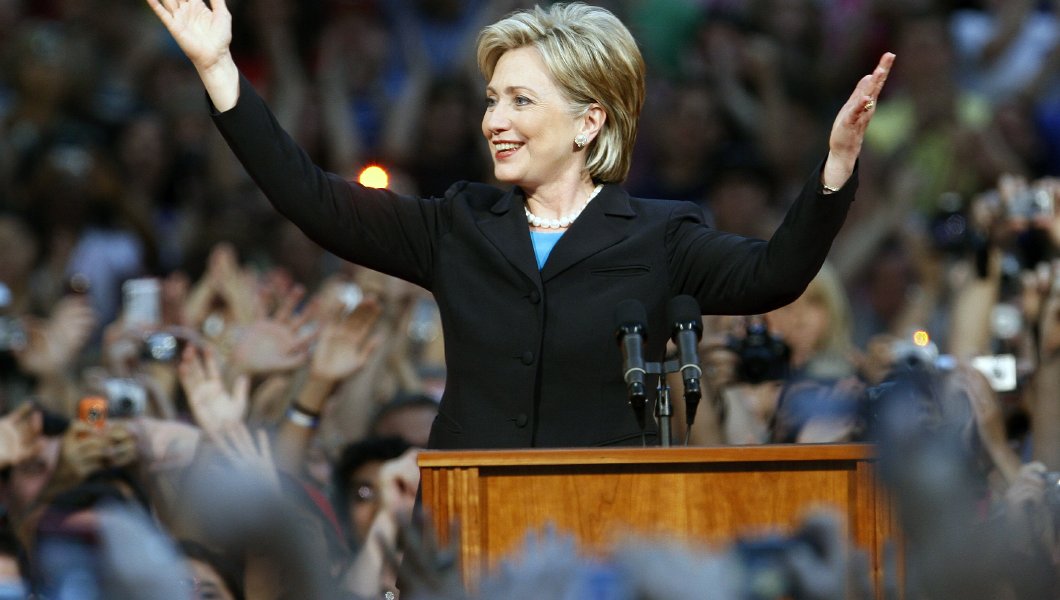
With the legislative and judicial branches populated with women, only the metaphorical glass ceiling of the executive branch has yet to be shattered. Hillary Clinton was the first woman to make a run for the presidency as a candidate from a major political party; however, women have been denied even lateral access to the White House prior to 2016.

In the presidential election of 1984, Geraldine Ferraro joined the ticket of Walter ferraroMondale, who won the Democratic nomination. Formerly a member of the House of Representatives, Ferraro was the first female vice presidential candidate for a major party. Not surprisingly, the media focused on the novelty of a female on a major ticket and critiqued her on inexperience. Reporters called into question her marriage, family finances, and even tried to invent a connection to the Italian mob based on her family’s heritage. The campaign never recovered, and Reagan/Bush went on to win decisively in November.

Sarah Palin received scrutiny as well when she became John McCain’s running mate in the 2008 presidential election.  Beyond inexperience, the media had a seemingly endless supply of drama-filled topics and attacks; her intelligence, her teenage daughter’s pregnancy, and her history in beauty pageants. Likely voters had divided opinions about her, especially after a story that the Republican National Committee had financed her wardrobe. Although she later became an icon of the conservative movement, McCain/Palin lost to Obama/Biden 52.9% to 45.7%

Transcending party lines and spanning decades, attempts to elect a woman into the White House, either as the president or vice president of the United States, have fallen short. The closest we have come is seeing intelligent, accomplished first ladies take on projects during their husbands’ time in office, at least gaining some platform to enact change. This tradition started largely with Lady Bird Johnson’s national beautification initiative and has continued ever since. Before Lady Bird made the tradition official, Eleanor Roosevelt was an outlier in her determination to use her platform to make a difference. When she spearheaded an anti-lynching campaign during her husband’s presidency, a New Jersey woman wrote FDR’s assistant, asking if the president couldn’t “muzzle [his wife]…she talks too damn much.” 

Political scientists and sociologists can speculate about whether voters are threatened by powerful women, more comfortable with “traditional” gender roles, or perceive women as having weaknesses ill-suited for executive power. Yet given Clinton’s near miss in 2016, it seems likely that there will be another great shift in American political culture, as in the 1920s, which will finally see a woman win the White House.

Compromise & Harmony: Lincoln on Peacekeeping

By Duane Soubirous

“Discourage litigation. Persuade your neighbors to compromise whenever you can. Point out to them how the nominal winner is often a real loser–in fees, expenses, and waste of time. As a peacemaker the lawyer has a superior opportunity of being a good man.”

Today’s quote comes from a lecture Abraham Lincoln delivered to lawyers, but you don’t have to be a lawyer to heed Lincoln’s advice.

In today’s political climate, it’s easy to get trapped in a bubble, whether that is on social media or in real life. People tend to consume news that reinforces their already held beliefs. With a screen as a shield, they will defend these beliefs tooth and nail. Lincoln, albeit long before the Twitter era, warned that self-righteousness and stubbornness can bring about costly litigation or resentment. Is it not better to concede how the other person might be misunderstood and offer a compromise, than to declare your righteousness and demand the other party concede everything?

In between Lincoln’s election and inauguration, many states in the Deep South seceded and seized control of federal property, with no objections whatsoever from President Buchanan. In his first inaugural address, Lincoln had to choose between stating that he would reclaim property already lost, or that he would only defend property still controlled by the government.

Lincoln would have been constitutionally correct if he affirmed his right to reclaim stolen assets, but his advisors worried that taking an offensive stance would immediately unite the Upper South with the Deep South against the Union. In the end, he proclaimed during his inaugural that he would “hold, occupy, and possess” federal property, not reclaim it.

Lincoln took a conciliatory tone again when he addressed the president’s unilateral authority to appoint federal officers. If locals objected to Lincoln’s appointees, he said he would not force those “obnoxious strangers” upon the locals.

Stephen A. Douglas

The inaugural address worked, if only temporarily. Stephen A. Douglas, a candidate in the 1860 presidential election whose platform called for national unity over slavery restrictions, thought the speech “would do much to restore harmony to the country.”

To criticism from abolitionist hard-liners that Lincoln was conceding too much to secessionists, Lincoln wrote that it “was sometimes better for a man to pay a debt he did not owe, or to lose a demand which was a just one, than to go to law about it.” Even in deeply divided times, Lincoln sought the middle road. He wanted to unite the country, and aimed to ease, not exacerbate, the growing tensions. 

The Presidency & the Power of Nature

By Kaleena Fraga

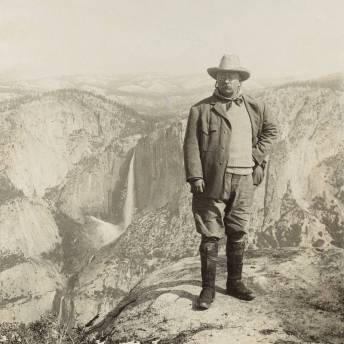
When considering the power of the presidency in the conservation of nature, Theodore Roosevelt is often the first name that comes to mind. Rightly so. After touring the Grand Canyon in 1903, during a national debate over preserving the land or using it to mine precious medals, he insisted:

“Leave it as it is. The ages have been at work on it, and man can only mar it…Keep it for your children, your children’s children and for all who come after you, as one of the great sights which every American should see.”

He said it would be a tragedy to cut down the great redwoods of California to make decks or porches. To those who advocated progress over preservation, he stated that:

“There is nothing more practical, in the end, than the preservation of beauty, than the preservation of anything that appeals to the higher emotions in mankind.”

TR GC
Roosevelt at the Grand Canyon

Yet we would be remiss to forget Lady Bird Johnson’s legacy of conservation. Although it’s largely a given today that first spouses will work on projects of their own, Lady Bird was the first person to put this into practice. She decided to pursue something that made her “heart sing.” As a little girl, Lady Bird had grown to deeply love the outdoors, and especially the flowers from her native Texas.

Although she’d never particularly liked the term, thinking it too indicative of cosmetics, the project became known as beautification. Writing in her journal in 1965, Lady Bird explained why she thought the project so important: “All the threads are interwoven– recreation and pollution and mental health, and the crime rate, and rapid transit, and highway beautification, and the war on poverty, and parks — national, state and local. It is hard to hitch the conversation into one straight line, because everything leads to something else.”

Lady Bird believed, simply, that people would be happiest surrounded by trees and flowers and greenery (she was right). Lady Bird and Lyndon Johnson took the project national with the Highway Beautification Act–an attempt to clean up the nation’s highways, and take down the billboards. Although watered down, the bill did pass. Lady Bird also focused much of her efforts on cleaning up Washington D.C.

Lady Bird
Lady Bird at the Wildflower Center

After LBJ’s presidency had ended, and after he had died, Lady Bird continued to work on the project. In 1982, Lady Bird started the National Wildflower Researcher Center in Austin, which was renamed the Lady Bird Johnson Wildflower Center on her eighty-fifth birthday. Although it started with Lady Bird’s donation of sixty acres, the Center now stretches across 284 acres and contains more than 800 kinds of native Texas plants.

Preserving nature and protecting federal lands wasn’t always a partisan issue. Theodore Roosevelt was a Republican. Lady Bird and Lyndon Johnson were Democrats. Richard Nixon, whose administration created the EPA, was a Republican. Given that Roosevelt signed the Antiquities Act, which gave the executive the power to protect federal land as a monument, and Lady Bird believed so strongly in the importance of beauty and nature, one has to wonder what they would think about the Trump administration’s decision to reduce the Bear’s Ear Monument by eighty-five percent. Trump, no stranger to unprecedented moments, is the first president to seek to modify a natural monument since the signing of the Antiquities Act in 1906.

Special thanks to Betty Boyd Caroli’s “Lady Bird & Lyndon” and Doris Kearns Goodwin’s “The Bully Pulpt: Theodore Roosevelt and the Golden Age of Journalism” for providing the background for this post.

Moderation in a Splintering Society: Lincoln on the Power of Listening

By Duane Soubirous

1840s Abe
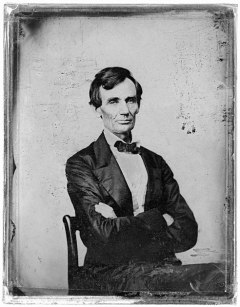
Abraham Lincoln circa 1840, pre-beard

This post is the first of many dedicated to Abraham Lincoln. Unless otherwise noted, the quotes come from Michael Burlingame’s two-volume biography titled Abraham Lincoln: A Life. In the Author’s Note, Burlingame wrote that Lincoln’s character “can be profitably emulated by all.” To spare History First visitors from reading the entire biography (but if you have the time, I can’t recommend the books highly enough!), I have picked quotes and added commentary that will illustrate Lincoln’s political views and personal advice.

Here’s a quote from the 1840s, before he was elected to his sole term in the House of Representatives.

“It is an old and true maxim, that a ‘drop of honey catches more flies than a gallon of gall.’ So with men. If you would win a man to your cause, first convince him that you are his sincere friend.”

While abolitionists employed fiery rhetoric against slaveowners and called for the immediate emancipation of all slaves, Lincoln spoke with moderation. He said that Northerners and Southerners were different only in the circumstances of their upbringing: had Northerners been born into slaveholding families, they too would fiercely defend slavery.

Lincoln ran for president on an antislavery, not abolitionist, platform. He denounced the institution of slavery without demonizing slaveholders. He advocated for a gradual extinction of slavery and supported a plan where the government would compensate slaveholders for emancipation, angering abolitionists who believed the government shouldn’t fund the evil institution of slavery. Lincoln told crowds that he was committed only to executing the first step: stopping slavery from expanding, containing it to states where it was already legal.

William Lloyd Garrison's
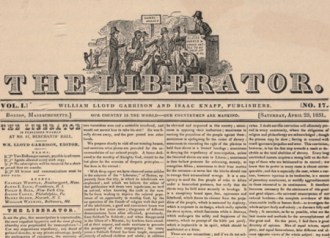
William Lloyd Garrison’s “The Liberator”

Given that states began seceding before Lincoln was even inaugurated, it would seem that Lincoln might as well have echoed abolitionist newspaper editor William Lloyd Garrison, who wrote, “NO COMPROMISE WITH SLAVERY! NO UNION WITH SLAVEHOLDERS.” Lincoln’s strategy may have worked today, where voters can pull out smartphones and watch candidates’ speeches anywhere. Presidential candidates in Lincoln’s time relied on newspapers to spread their message, and the Southern press heavily distorted Lincoln’s message. They sounded the alarm that a President Lincoln would call on slaves to kill their masters, impregnate white women, and turn America into nation of mulattos.

Lincoln held firm to his belief that slavery was morally wrong, but he also recognized the importance of discussing its eradication with abolitionists and slaveowners, neither of which he aligned with. In the midst of the secession crisis he even signaled that he was open to compromise in his stance against the expansion of slavery. That wasn’t enough for slaveowners, and by refusing to concede a little, they ended up losing a lot.


Roy Moore, Grover Cleveland, and Morality in American Politics

By Kaleena Fraga

In 2014, the French president François Hollande was photographed visiting his mistresshollande via scooter. The French barely blinked. In the 1990s, when Bill Clinton faced accusations of adultery while in office, the affair consumed the country. For Americans, the private lives of politicians and public officials are often important indications of their character.

Over the past few months, a dam has been breached in American culture and politics concerning sexual harassment, outing powerful figures like Roger Ailes, Kevin Spacey, and Louis C.K. Roy Moore, running for Senate in Alabama, and Al Franken, the current Senator from Minnesota, are the latest public figures to face accusations of sexual impropriety.

While the others can dip out of the spotlight, or “seek treatment,” as many of them have, Moore is facing an election in less than a month. Out of these men, he is the only one who Americans have a chance to judge. For many Alabamans, the choice between Roy Moore, accused by several women of inappropriate behavior when they were children, and Doug Jones, a Democrat, is a choice with no easy out. Representative Mo Brooks of Alabama stated (while being stubbornly pursued by a reporter) that he would still vote for Roy Moore because, “Democrats will do great damage to our country.”
mo brooks.gif
When in history has a candidate’s morality become an issue in an election?

One good example is the campaign of Grover Cleveland in 1884. Cleveland faced accusations of having a baby out of wedlock with a woman named Maria Halpin. When the baby was born, it was put up for adoption and Halpin was committed to a mental asylum–despite doctors there finding nothing especially wrong with her. Halpin said that their encounter had not been consensual, that he’d put the baby up for adoption, and forced her into the hospital.

Ma_ma_wheres_my_paCleveland claimed that the paternity was uncertain; his supporters dismissed the allegations as “boys being boys” although in 1884, Cleveland was 47 years old. Republicans reveled in this, and would gather to chant “Ma, ma, where’s my pa?” at Cleveland rallies.

But the Republicans had problems of their own. Although Cleveland was morally problematic, his opponent, Republican James Blaine, had been roasted over the public coals for his corruption concerning the nation’s railroads. The choice, then, was whether the voters wanted a man who had corrupt morals, or one who was just corrupt.

Cleveland narrowly defeated Blaine, becoming the first Democrat since the Civil War to be elected president. Victorious Democrats answered Republican’s taunts with, “Off to the White House, ha, ha, ha!”

There’s no evidence that Doug Jones is corrupt as Blaine was, but the anecdote does suggest that a candidate, even one as problematic as Moore, could be elected. Especially if some voters in Alabama see electing a Democrat as just as bad, if not worse, than someone accused of sexually harassing young girls.

Veep 2020

Joe Biden is back in the news this week, raising two questions. One, will he run in 2020? Two, if he had run in 2016, would he have won?

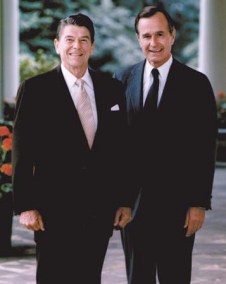
Vice presidents have had mixed luck in seeking the office themselves. If Biden had run in 2016 and won, he would have joined a somewhat exclusive club of men who were elected president directly after being vice president. Not counting those who became president after a death, only four men have served as vice president and then directly ascended to the vice presidency. John Adams succeeded George Washington in 1786; Thomas Jefferson succeeded John Adams in 1800; Martin Van Buren succeeded Andrew hw and rrJackson in 1836. This feat would not be repeated until 152 years later, when George H.W. Bush became president after serving as Ronald Reagan’s VP for eight years.

In recent history, the country has seen vice presidents fail at achieving the presidency–Al Gore attempted to succeed Bill Clinton in 2000 and lost to George W. Bush and Hubert Humphrey attempted to succeeded LBJ in 1968, but lost to Richard Nixon.

So, if history is any indication, it would have been a challenge for Biden to ascend to the presidency in 2016 after serving two terms as Barack Obama’s vice president. But following that logic, it would be statistically even less likely for Biden to become president after waiting out a term. Only Richard Nixon has done so–he ran for president after serving as Dwight Eisenhower’s vice president but lost to John Kennedy in 1960. It wasn’t until 1968 that Nixon was elected president. Surprisingly, he’s the only vice president to have followed this particular path.

Indeed, the vice presidency doesn’t seem to at all guarantee an easy road to the presidency. The most direct path from vice president to the presidency seems to be the jfk lbjdeath of the incumbent–eight vice presidents became president this way, including Calvin Coolidge, Teddy Roosevelt, and LBJ, who once eerily remarked before Kennedy’s inauguration that he’d accepted the number two spot because, statistically, there was a one in four chance Kennedy could die in office.

Vice presidents face a myriad of challenges when running, especially when attempting to run for president directly after being vice president. For one thing, presidential elections often seem to inspire a desire for change among the electorate (especially after eight years). It’s a juggling act for any candidate of the same party of the incumbent, as they must define themselves apart from the president, and respond to criticism of the president without damaging his legacy. Al Gore faced this challenge when struggling to decide if he should campaign more with Bill Clinton–Clinton fatigue was in the air, so Gore decided against it. But in such a close election, Clinton’s support could have helped.

Presidents are also generally protective of their legacy. Vice presidents, especially when trying to make the leap from VP to POTUS, need to embrace the accomplishments of their administration. Yet it can be hard to define exactly what a vice president accomplished during office, whereas most big accomplishments are claimed by the president. A stark example of this came out in the 1960 election, when Eisenhower was asked to name a decision that Nixon had made during his two terms as Ike’s VP. Despite Nixon’s loyalty to Eisenhower, his work as a liaison between the White House and Congress, and his successful trips abroad, Eisenhower stumbled on the question. He gave the infamous answer: “Give me a week, I might think of something,” providing plenty of fodder for the Democrats defending their candidate (Kennedy) from accusations of youth and inexperience.

If Biden were to run in 2020, it could be an uphill battle. He could embrace Obama’s legacy, but would need to define himself outside of it. Like Nixon, Biden would likely benefit from his time out of office. If Trump’s first year in office is any indication, 2020 could wrap up a volatile four years–Americans may seek familiarity and the “insider” credentials that Biden possesses. Then again, the electorate is fickle, and it may continue its search for the next, new candidate.

Voodoo Economics & the Myth of the Reagan Tax Cuts

By Kaleena Fraga

Sometimes, it seems that the lure of tax cuts is all that is keeping the Republican party going. The House Speaker, Paul Ryan, has consistently tuned out the political storm around him–Russia! Collusion! Roy Moore!–holding instead a feverish focus on his goal of cutting taxes, half-joking that it’s what he wanted to do since he was drinking from kegs.

Ryan duly follows the Reagan era wisdom that a tax cut, largely benefitting the richest Americans, will drive economic growth for all. In his plan, 80% of the benefits would go to the top 1%. The average tax cut of the top tenth of the top 1% would be $1 million dollars annually. The plan would additionally slash the corporate tax rate, even though corporate profits are at an all time high. Although there is some feeble insistence from the White House that this is a tax cut for the middle class, it clearly has its roots in ideology from 1980s.

In 1980, Ronald Reagan ran on the idea of a large tax cut in order to spur economic growth after a lagging decade. His opponent in the primaries (and future vice president) George H.W. Bush, labeled this idea “voodoo economics” during a debate at Carnegie Mellon University. As a candidate for vice president, Bush had to backtrack. He later got in trouble himself when, as president, he promised to not raise taxes (the infamous “read my lips” statement), but felt so strongly that they were necessary that he went back on his word.

After the Reagan tax cuts were passed in 1981, the U.S. government developed huge deficits. In fact, one of Reagan’s advisors and an architect on the 1981 tax cut recently wrote an op-ed in the Washington Post to warn that tax cuts do not equal growth.

In addition, the country can look to Kansas as a canary in a coal mine. Similar trickle-down tax cuts in that state slowed growth, produced less than expected revenue, and forced cuts to government programs.

The GOP–desperate for a legislative win–seems determined to push the cuts through. Democrats are united against the plan, but would need Republican support to stop their passage. Until then, it would be prudent for President Trump to look to history, to a living member of his exclusive club, to see just how tricky voodoo economics can be.