Remember Him?: Legacy and Historical Memory

By Kaleena Fraga

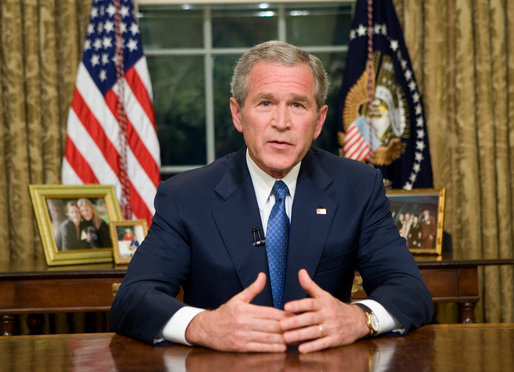
Last week, President Bush gave a speech defending traditional American values, which many interpreted as a veiled attack on President Trump. The twittersphere was full of comments and memes about how Bush was no longer the worst president, how he had “joined the resistance”, and that, compared to the daily twists and turns of the Trump administration, Bush’s was almost idyllic.

It’s a strange thing, since Bush left office in 2009 with an approval rating in the mid 30s.

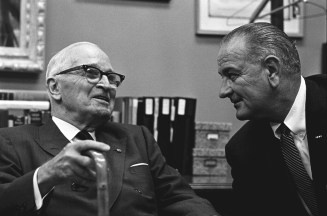
johnson & truman
Johnson & Truman

Still, Bush is not alone. Aside from Richard Nixon, whose legacy continues to suffer, most presidents who leave office as unpopular figures see their approval rating climb as the nation moves on. In 2017, Bush now has an approval rating of 59%. Harry Truman also left office with an approval rating in the mid-30s. Yet today he often finds himself in the top ten of lists of the best presidents. Lyndon Johnson, likewise, decided that he would not run for reelection in 1968 because of his deep unpopularity and his failure to end the war in Vietnam. Yet today he is lauded for his work on the Great Society and civil rights, and also often ranks high among the “best” presidents.

In this era of immediate news it seems society is expected to form opinions as fast as possible. Still, it’s worth noting that legacy is something alive, something that can change with time and perspective. It’s difficult to see how actions today can alter the events of tomorrow. Trump is currently one of the most unpopular presidents of all time, especially so early in his term. He does not seem to have the capacity or desire to change the course he’s on–yet it’s impossible to say whether this unpopularity will endure or whether Trump’s legacy, whatever that is, will be given the same, gentle treatment of his modern predecessors.

Then again, he might join universally acknowledge duds–duds like James Buchanan and Warren Harding, who through their ineffectiveness and corruption consistently find themselves at the bottom of presidential rankings.

Jeff Flake: A Welch or a Rockefeller?

By Kaleena Fraga

On Wednesday, Senator Jeff Flake did a remarkable thing–he stood up in front of his colleagues and denounced the president of his own party. Flake called President Trump’s policies “destructive.” He declared he would no longer be “complicit or silent.” And Flake said he hoped that his words would have the same effect as Jack Welch in 1954, when Welch turned to Joe McCarthy and asked the question that ended McCarthy’s career–“have you no sense of decency?”

Welch expressed what many in government thought but feared to say and his words carried weight with Americans who’d watched the McCarthy hearings on TV. McCarthy’s popularity quickly dried up. He was censured by his colleagues in the Senate and died three years later at 48, an alcoholic. It was a spectacular downfall for a man who’d once cowed Eisenhower into dropping remarks praising McCarthy enemy John Foster Dulles.

For Flake to say he hoped his words would produce a similar reaction seems to suggest that Flake is gunning for impeachment. He joins his colleagues John McCain and Bob Corker in their outspoken disapproval of the president’s behavior (if not, judging by their votes, his policies). Flake seems to think that his words may encourage others to voice their opinions, since it’s widely acknowledged that many GOP senators share Flake’s view but are not willing to air their grievances in public. After all, aside from their dislike of the president, Flake, Corker & McCain have one other thing in common–none of them are running for reelection.

Flake’s words could turn the tide. He could be the Jack Welch in this saga. Or he could be the Nelson Rockefeller.

In 1964, Barry Goldwater won the Republican nomination through tough talk, endorsements of extreme methods, and his blasé attitude toward using nuclear weapons–he was the inspiration for LBJ’s “<a href="http://”Daisy” ad and he once said the U.S. should “lob one into the men’s room at the Kremlin.” The Republican party faced a struggle for its soul over his nomination but given the ferocity of his popularity among many Republican voters, no one wanted to speak out against him. Nelson Rockefeller, who’d run but lost the nomination tried. During the GOP convention in which Goldwater declared, “extremism in the pursuit of liberty is no vice,” Rockefeller denounced “extremists” in the Republican ranks.

His words were drowned out by boos.

It’s too early to tell if Flake will encourage his colleagues to speak out or if he’ll be shunned by Republican voters. It certainly seems that two kinds of Republicans are emerging from the Trump presidency. But then again, maybe this all started in 1964, when a Republican had to decide if s/he were a “Goldwater” Republican, or something else entirely.

It Can’t Happen Here?: A Brief History of Third Parties in American Politics

By Kaleena Fraga

Since its founding, and despite a famous warning from George Washington, the United States of America has almost always been a two party system. In Washington’s day, it was the Federalists and the Democratic Republicans. Today, through much evolution, we have the Republican and Democratic Party, and more distance between them than ever before.

Aside from the 1850s, which saw the fall of the Whig party, the rise of the Know-Nothing party, and from this conflict the birth of the Republican party, the United States has usually had two major candidates to choose from. But today there is growing discontent toward the two major parties and the so called “establishment” class of politicians. Many Americans are itching for something different. Indeed, this longing is one of the reasons for Donald Trump’s election. But how feasible is an American third party, and when in history has the country attempted it?

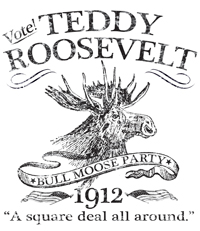
Third parties have always been around. In the 1890s the Progressive Party pulled the political conversation to the left and William Jennings Bryan, the Democratic candidate TR-SQUARE-DEALin 1898, 1900 & 1908, flirted with many of their proposals. In the election of 1912 Teddy Roosevelt upended the process by storming out of the Republican National Convention and creating the Progressive Party, or the Bull Moose Party. After failing to convince the delegates to nominate him, instead of the incumbent president William Howard Taft, Roosevelt thought he could still win the election as a third party candidate. All he did, however, was divide Republican votes and give the election to the Democratic nominee, Woodrow Wilson. A Republican operative at the time remarked that the drama between Taft and Roosevelt was like complaining over which corpse got more flowers—the party division would surely give the election to the Democrats. Fun fact: although Roosevelt called the party the Progressive Party, he’d been widely quoted as saying that he felt “as fit as a bull moose” following an assassination attempt. Bull Moose stuck.
Indeed, most candidates haven’t gone as far as Roosevelt in creating their own party when seeking to change the political conversation. Although George Wallace ran as the American Independent Party candidate in 1968, he sought the Democratic nomination in 1964, 1972, and 1976. Barry Goldwater, although holding more extreme views than many Republicans, still sought (and won) the Republican nomination in 1968 over the more moderate republican candidate Norman Rockefeller. In 1976 when Ronald Reagan ran against the incumbent president Gerald Ford, he did so as a Republican, not as a third party candidate. Likewise, Ted Kennedy ran against Jimmy Carter in 1980 as a Democrat. During this race one Democratic operative remarked that the party needed some unity medicine—to turn around three times and say out loud President Ronald Reagan. And, indeed, in both the Reagan-Ford and Carter-Kennedy case the party dynamics divided the party and contributed in the elections of Jimmy Carter in 1976 and Ronald Reagan in 1980.

George H.W. Bush, Ross Perot, Bill ClintonThe election of 1992 saw the impact a third party could have—Ross Perot ran against Bill Clinton and George H.W. Bush as the Reform Party candidate. Despite dropping in and out of the race, Perot participated in the debates and won nearly twenty percent of the vote, making him the most successful third party candidate since Roosevelt and the Bull Moose party. Perot arguably drew away Republican votes, and Clinton won an unexpected victory against an incumbent president. Despite the success, the Reform party is no longer a heavyweight in American politics—although it continues to nominate candidates.

The election of 2016 is a good indication of the power a third party can have, as well as a possible indication of future electoral trends. Voters, frustrated with both parties, turned out for 3rd party candidates like Jill Stein and Gary Johnson. Although both Johnson and Stein won only small portions of the overall vote, they gained thousands of votes in crucial districts. In Michigan for example, Johnson and Stein won approximately 222,000 votes. Trump won the state by only 15,000 (https://www.nbcnews.com/storyline/2016-election-day/third-party-candidates-having-outsize-impact-election-n680921)

Even voting for Trump himself, a decidedly non traditional Republican candidate, is an indication of discontent among the American electorate, and a desire among voters for someone outside the traditional two party structure.

As the country speculates about the next election (it seems incredible, but the campaign will likely start next year, in 2018) the normal question to ask is who among the Democrats will run. For 2020 however, it seems that Democrats might not be alone in presenting a viable nominee to run against Trump. First of all, there’s a good chance that Trump, like Carter and Ford, will face a challenger from within his own party. Trump, at least today, is a historically unpopular president and it’s likely that the battle for the soul of the Republican Party will spill out into the 2020 primaries.

The Republicans aren’t the only ones infighting. Scars from the 2016 primary between Hillary Clinton and Bernie Sanders continue to agitate Democratic voters and operatives. If Democrats cannot present a candidate who is sufficiently liberal, it’s certainly possible that someone from the Bernie Sanders wing of thinking could run as well. Given that Sanders is not technically a Democrat, this person could, in theory, run as an independent to the left of the Democratic candidate.

But what would be really interesting is if a candidate emerged to the center of both parties. Over the last half century, the country has seen the divide between the left and right deepen. The repeal of the Fairness Doctrine in the 1980s created an opening for right-wing talk shows and news networks like Fox News, which present a decidedly partisan view of the world. Meanwhile, the Democrats are also promoting liberal news agendas. Podcasts like Pod Save America are not timid in presenting and endorsing liberal ideas and interpretations of current events. Both parties are moving away from center; meanwhile many Americans feel left somewhere in the middle. There are purity tests on both sides and it’s become normal for someone to be challenged from the extreme wing of their own party.

It seems, then, like an ideal time for a centrist third party candidate. Discontent toward macronthe two party system is growing, the two parties are becoming more extreme in their ideology, and American voters are suffering from continuing partisan gridlock in Washington. Perhaps many voters imagined Donald Trump would be the kind of president who could break through the gridlock, without having a true allegiance to either party. But he’s proven himself to be a partisan with no interest in reaching out to voters outside his base. What the country needs in a third party candidate is someone more like Eisenhower—a person, not necessarily a politician, who is well-liked and well respected by Americans of both stripes, who is apolitical but accomplished. The world saw a similar phenomenon in the election of Emmanuel Macron in France—Macron created his own party and took down candidates to both his left and right.

But can it happen here? Only time will tell.

(Featured image credit: http://axiomamnesia.com/2012/02/28/americans-political-party-as-gonna-fix-american-politics/)
Any Hope for the Nixon Ghost?

By Kaleena Fraga

Upon leaving office, most presidents enjoy a reexamination of their legacy, unplagued by partisanship, varnished by time, and held astride the current occupant of the presidency and his struggles. Even George W. Bush, one of the most unpopular president of modern times, has seen his popularity grow as his tenure in the White House fades from collective memory. Yet Richard Nixon is denied the luxury of time.

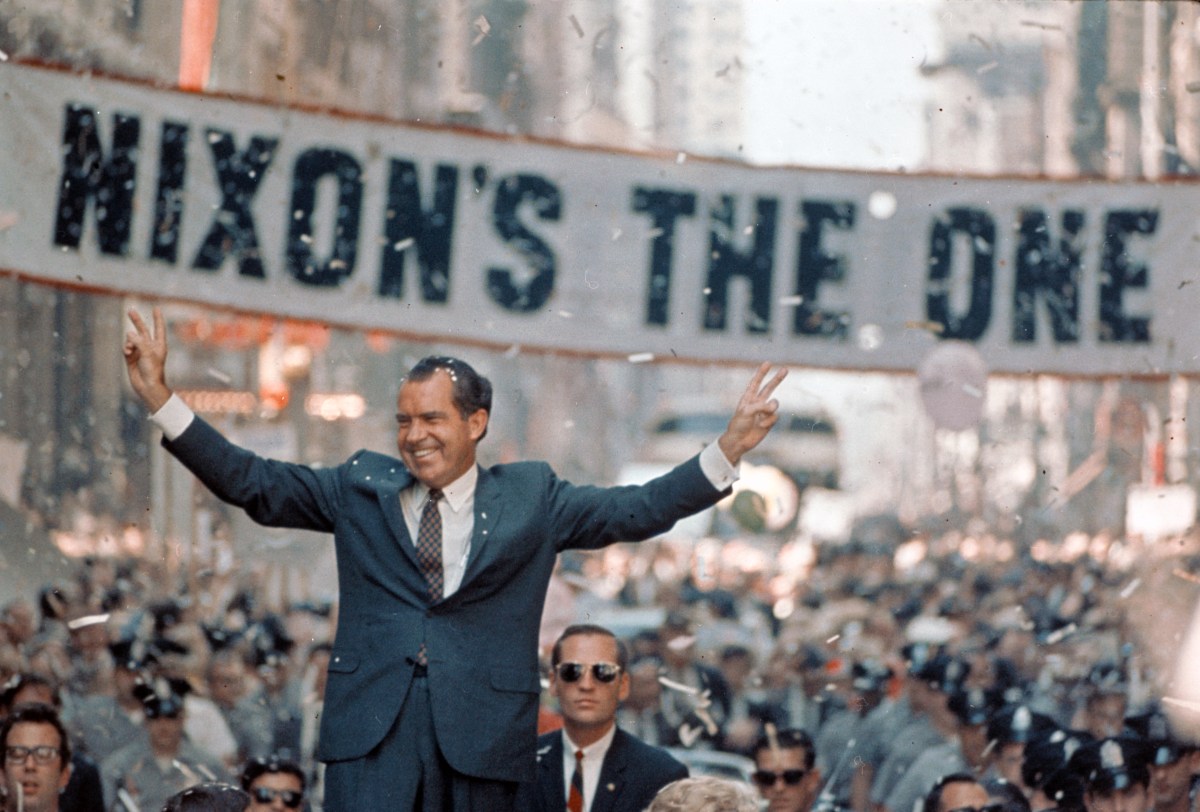
Indeed, it’s far too easy to throw Nixon under the proverbial bus of history. Today, in an era ripe with scandal, pundits Richard M. Nixonare eager to add the -gate moniker to anything that appears to suggest impropriety. This knee jerk reaction to make Nixon the boogeyman of American political commentary is lazy, and unfair to his administration’s accomplishments in office.

It’s increasingly popular today to draw comparisons between the Nixon presidency and that of Donald J. Trump. Yet the two men could not be more different.

To start with the basics, one has to venture back to Nixon’s hometown of Whittier, California. Unlike Trump, who was born into money and coasted on his father’s coattails his entire life, Nixon was born to humble means—the son of a grocer. Nixon ascended because of his intellect—he consistently excelled in school and was offered a place at elite east coast universities, places he had to turn down to stay close to home. He served his country during WWII in the Navy (Trump infamously received five deferments for “ankle spurs.”) Despite the commonly accepted image of Nixon as painfully introverted, he was well-liked among his men and proved himself as an officer. Accepted to Duke University Law School after the war, Nixon lived in what amounted to a shack in the woods in order to afford his tuition.

Although dangerous to play the “what-if” game in the realms of history, one has to wonder what would have happened if Nixon had bested Kennedy in 1960. An able Vice President, he proved himself loyal to Dwight D. Eisenhower and a capable representative during his trips abroad. Nixon, doomed by a promise he’d made to visit all 50 states and a recurring knee injury, appeared sickly and unfocused during the first debate with Kennedy. Forgotten by history, he vastly improved in the next three. The election was one of the closest ever, and one in which Nixon and his confidents were sure had been rigged in Illinois and in Texas. We’ll never know how Trump would have reacted had he lost to Clinton, but Nixon chose not to agitate the issue of election tampering, instead stepping aside and allowing Kennedy, his once friend, now enemy, to become president.

During his own tenure as president, Nixon boasts an impressive list of accomplishments—many of which would have pleased today’s liberals. He sought to alleviate the tensions of the Cold War, becoming the first sitting president to visit Moscow. He opened up diplomatic relations with Communist China. Nixon created the EPA and oversaw the implementation of Title IX. It was under Nixon that a man went to the moon. And in 1972, the electorate rewarded him mightily, handing him a 49 state victory (only MA denied him a full sweep).

This is not to deny the wrongs Nixon committed in office, only to complicate them. Nixon was paranoid. He was secretive. He swore and used racial epithets. He escalated and expanded a war he’d promised to end. Still, his resignation from office shocked 

gettyimages-57655832_wide-2fb573c1d1392bc47fe7bb904357239a1b820fb4.jpg

the world. Stephen Ambrose notes that many Europeans greeted the news with dismay—they thought Nixon the best president that the United States had had in recent memory.

Nixon will always be a president (the only one thus far) who resigned from office. He’ll always be the man who let Watergate destroy his administration from the inside. But it’s important to recognize that these events were part of a larger picture of the Nixon administration. It’s easy but inaccurate to link Trump to Nixon. Rather, it would do the country good to examine the intricacies of Nixon’s legacy, and to recognize its failures alongside its successes.

Donald Trump and the Tetrium Quids

By Kaleena Fraga

Donald Trump’s apparent willingness to negotiate with Democrats has sent shockwaves through Washington. Conservatives are alarmed, Trump’s base are burning their MAGA hats, and many in the country are wondering if the party will move towards a schism between conservative and moderate Republicans.

The truth is, however, that there has long been tension between moderates and conservatives in the Republican Party. This tension most often becomes apparent during a Republican presidency, when the president must wrangle with more conservative members of his own party.

roberttaft
Speculation of Taft’s presidential ambition

Perhaps the starkest example in modern American history comes from the Eisenhower administration. Ike had faced Robert Taft during a tough presidential primary (Taft, the son of a president literally went by the nickname Mr. Republican). Now as president, Ike needed to work with Taft and the GOP coalition known as the “Old Guard.” This group of conservatives protested the country’s swing to the left during the Roosevelt years and the emerging international world order. Ike, on the other hand, aimed to govern from within the parameters of the New Deal and believed in the importance of NATO. Ike then faced resistance both from Democrats mourning their loss of power and conservatives members of his own party.

Eisenhower is famous for scolding this wing of his party, saying that any political group that sought to abolish New Deal benefits was “…a tiny splinter group, of course…their number is negligible and they are stupid.”

Still, Eisenhower’s Republican credentials weren’t impeccable. Before he ran, no one knew if Eisenhower was a Republican. Truman once even tried to get him to run on the Democratic ticket. Thus rose the frustration from conservatives who’d supported Taft as a “true” conservative.

A study of the recent history of the GOP—from Eisenhower on—will reveal a similar pattern. In the 1960s, there was Barry Goldwater and there was Nelson Rockefeller. In the 1970s, Gerald Ford and Ronald Reagan. In the 1990s, George HW Bush and the conservative speaker of the house, Newt Gingrich. A Republican president, it seems, must always face a wing of his party that is more conservative, more stubborn, and more aghast at the idea of bipartisanship.

It may seem like a modern phenomenon, but this tension has existed in American conservatism since the early days of the country. Thomas Jefferson, who supported states’ rights and feared the reach of a powerful central government, would probably identify more with today’s Republicans than the Democrats who claim his legacy. Before he came to power in 1800, Jefferson was content to criticize the Washington and Adams presidencies and to defend the rights of states against the federal government. But once he became president, Jefferson had no qualms about exerting executive power himself, much to the chagrin of the conservative wing of his party.

The revolt was led by Jefferson’s distant relative John Randolph in March of 1806. Randolph was alarmed by Jefferson’s use of executive power, and he wasn’t alone. He and his faction believed that Jefferson was no longer Republican enough. This should be a familiar refrain to anyone who follows today’s politics, where GOP nominees like John McCain and Mitt Romney faced criticism for lacking in conservative credentials.

Randolph’s faction was called the Quids, named for “tertium quid” which means “third something” in Latin. They were also called the “Old Republicans”—sound familiar? Randolph accused Jefferson of compromising with Federalist ideals. Moderation, he declared, was the mask which ambition has worn. In 1964, Barry Goldwater echoed this idea when he claimed that: “Moderation in the pursuit of justice is no virtue, and extremism in the defense of liberty is no vice.” For today’s conservatives, like yesteryear’s, principle is everything and compromise is a dirty word.

Enter Donald J. Trump

Trump was a controversial candidate but an effective one. He successfully wielded conservative discontent in order to cut down more traditional and more moderate Republican rivals. In doing so, in bringing the conservative wing of the party to the presidency, it seemed that Trump may have irrevocably changed the face of the Republican Party. It seemed that, finally, a “true” conservative had come to the White House, unwilling to compromise, and determined to force through principled, conservative ideas.

Yet it’s become clear that Trump will face the same ancient tensions as his Republican predecessors. He struggled to gather votes for health care because of the opposition of the Freedom Caucus, the most conservative group in Congress. Trump, in what may be a predictable move to observers of this phenomenon, reached across the aisle instead to the Democrats.

trump and cs
Trump’s deal with Democrats surprised and dismayed many conservatives

Trump’s presidency initially seemed that it would bring far right ideas to the forefront of American political conversation. Today, as he works with Democrats to find a solution to DACA, it seems instead that Trump may trigger a true war within the party, between conservatives and moderates. Conservatives have waited generations to see one of their own to rise to the presidency, someone who advocated for immigration restrictions, border security, traditional marriage, and strict abortion legislation. Yet now that he is in office, they are facing again that same, old disappointment—Trump is willing to abandon principle and make deals. As the GOP navigates the Trump presidency, and the growing tension between wings of the party, it should be aware that today’s battles are the product of an unrest as old as the country itself.

Famous Losers

By Kaleena Fraga

In every presidential election there is a winner, and there is a loser. For the winner, the path is clear. Go on to the presidency, watch your approval rating crumble, hopefully get something done while in office and (most likely) gear up to run again. For the loser of the presidential contest, the future is foggy. Do they emerge a leader of their party? Do they prepare to run again? Do they fade into the background of political history, or quietly enter a life of public service?

Once, losers didn’t have a choice. John Adams lost to George Washington and served as his vice president. Thomas Jefferson loJQA.jpgst to John Adams and served as his vice president. But today, a loser must go from being one of the most admired (or reviled) people in the country to last week’s headline.

President Trump has boasted often of his similarities to Andrew Jackson, and to the change election in 1828 that ushered Jackson into power. Jackson bested John Quincy Adams, who, as the son of a president and a founding father, belonged squarely to the Washington establishment. Jackson’s election shocked and horrified Washington elites. Henry Clay, the Speaker of the House, is purported to have taken ill, certain that Jackson’s election meant the end of the American experiment. Although devastated by his loss, Adams picked up the political flag two years later and went on to serve in Congress until his death in 1848—one of only two presidents to do so.

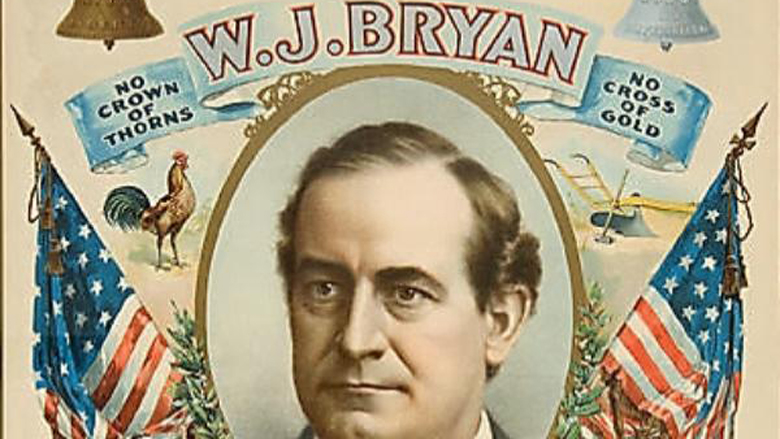
Perhaps the most famous loser of all is William Jennings Bryan. Bryan ran for president a record three times—in 1896 and 1900 against William McKinley and in 1908 against William Howard Taft. Bryan, a gifted orator, couldn’t seem to give up public life. He continued to speak widely after each defeat, amassing a large and loyal following. Although Bryan ran as a Democrat, he’d flirted with the Progressive Party before and many in his party resented his advocation of extreme measures. Many Americans saw him as above politics (not unlike Bernie Sanders in 2016) and as a man of the people. Bryan enjoyed a short tenure as Woodrow Wilson’s Secretary of State and became an advocate for prohibition. He later solidified a legacy as a hero of American Christians when he faced Clarance Darrow in a trial over whether or not teachers had the right to teach evolution in the classroom.

Later in the 20th century, Adlai Stevenson was known as the man who lost races to be president. He ran twice in 1952 and 1956 (almost three times, if he’d had his way in 1960). In the 50s Stevenson was bested by the tag team of Eisenhower and Nixon. In 1960, despite a strong backing from Democratic powerful like Eleanor Roosevelt, he lost the nomination to Jack Kennedy. Despite strained relations between the two men (Stevenson refused to publicly endorse Kennedy), Kennedy eventually appointed him ambassador to the United Nations. Stevenson is recognized today for his quick wit, with quotes attributed to him like:

“I will make a bargain with the Republicans. If they will stop telling lies about    Democrats, we will stop telling the truth about them.”

“You can tell the size of a man by the things that make him mad”

HRC

The most famous loser of our current time is, of course, Hillary Clinton. After losing to Barack Obama in the 2008 primary, she lost to Donald Trump in 2016. Clinton certainly has a legacy outside of her run for the presidency that will continue to define her. Today she remains as polarizing as ever, and it’s unclear what role she will play going forward. For now, she joins a group of distinguished men who, although losers, were extraordinary in their own way.